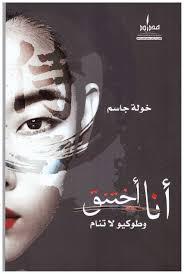
“I am suffocating and Tokyo does not sleep
The story of the book is:
I watch the city's inhabitants, programmed like robots, from the window of my narrow room, with dreams of attending those prestigious universities, those dreams that haunt us like ghosts.
Tokyoites wear the same faces, the same fake laugh.
The degree and inclination of bowing to greet one another is the same and does not increase or decrease a degree.”
In the small greenhouse that I built for my dear flowers and roses, secret conversations take place and stories are told. Each of them tells the other her legend and the stories she witnessed and heard.
I hide from them so that they do not notice my presence, and I record everything that happens between them in my notebook. It's always dawn, and I don't realize how long I've been here in this corner. The conversations and stories told by the roses were not happy at all, they were like thorns with their pain.
The notebook contains a mixture of myths, stories, and texts that Al-Basataniyya collected to share with the reader, as he talks about the dark side of unlimited happiness, about disappointments, and betrayals that never heal. About those human relationships that do not rise to the sky.
Briefly, about the definition of pain in its many faces, which are depicted with thorns running down their branches, leaving a prick, a mark on a finger that touched them, and hidden pain.
From every garden is a flower and from every garden is a thorn
Twenty-one thorns that the gardener documented in her notebook, proving that pain is a universal language that is not limited to the poor only, but transcends all social classes that humans have placed through their ignorance.
Introduction This book contains four chapters that include everything related to autism, its causes and treatment programs: The first chapter is an overview of autism disorder, its history and causes. The second chapter includes educational intervention and methods used with children with autism to reduce behavioral challenges. The third chapter included therapeutic programs, training, and other scientific programs that have been proven effective and successful with autistic children. The fourth and final chapter includes my advice as a mother who lived and feels like your experience, and my experience in developing my son’s academic and social skills.
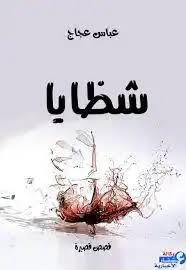
The novel 'Fragments' is the novel of an Arab generation trying to repair the fragments of history, homeland and dreams to reconstruct the picture so that life is understandable and liveable.
It is the story of a boy, Karmuz, named Imad, who tries to understand the condition of his father, Yazid, who rebelled against life in all its details. A boy decided to put together the remains of his father's pictures and clippings that he had saved from the fire when the father suddenly decided, at the height of despair and revolution, to set fire to his memory during a hot summer.
From the pictures and clippings that saved the boy “Imad,” the events of the novel begin to approach what was, as the pictures turn into a flowing stream of words that sheds light on the past of a man “or a generation, more precisely.”
In this book, we will try to address the knowledge society through three main spaces: the Arab, the Gulf, and the Emirati, relying on data and numbers indicating the development of these spaces towards the knowledge society, without claiming comprehensive knowledge of all its aspects, as this matter requires extensive and more specialized studies. However, we seek to confirm an important issue, which is that the shift towards a knowledge society is no longer an intellectual luxury, but rather an urgent need that requires more plans, programmes, institutions, competencies and skills.
In our endeavor, we also show the position of the United Arab Emirates in its pursuit of a knowledge society, through many indicators, which confirm the great effort made by the political leadership towards developing various structures, in order to provide the potential for transformation towards a knowledge society, which, in our opinion, reflects the strategic vision. The state faces the necessities dictated by the processes of economic transformation into a knowledge economy.







-1718344125.jpeg)