Was it still possible to add anything about Al-Mutanabbi, who filled the world and preoccupied the people, throughout these centuries that extended from his birth until now?!.. And did there remain a side of him that had not been studied, examined, and examined in more than one way, nor was it subject to discussion and debate among the fans of this great poet? And between his critics and haters?!.. Al-Mutanabbi is a unique figure in our literary heritage. His lovers, readers, and memorizers of his poetry are more numerous than those who can be counted, and it is too dangerous to clash with them without prior preparation and readiness. They have extensive knowledge of his poetry and many of the stages and details of his life. Their zeal in defending or attacking it is immeasurable. Therefore, the prior image is more binding. The imagined picture of him that they drew for him is too attached to the imagination to be discussed. Its relationship with national identity is more rooted and dangerous. This is what makes attacking him, for many, an attack on one of the nation’s “values and symbols.” But I am writing about Al-Mutanabbi after I spent two full years reading him, analyzing his poetry, and studying the details of his life in order to write a television series about him. Dramatic writing requires its author to penetrate as much as he can into the souls of his heroes in order to understand them, to imagine them in the situations in which humans might be, and to draw their reactions, with dramatic logic, as human reactions might be. All of this is within the framework of documented historical information.
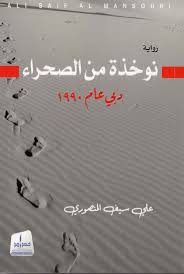
Obaid is a young orphan from Al Ain, born at the beginning of the twentieth century. He grew up in the desert and learned to make swords, but he loves the sea. He decided to travel to Dubai to become a sailor, and despite the opposition of his mother and sister, he left for Dubai, where he boarded one of the departing ships on a long journey.
The ship crashed on the shore of one of the islands, and Obaid was the only survivor. He discovered that a primitive tribe lived on this island. He tried to escape from the island, but the pirates and slave traders attacked the island and kidnapped the princess. His pride revolted and he freed the princess - and with the help of the people of the island - he defeated the pirates and slave traders. Obaid married the princess and had children with her. He longed to return to his homeland, but pirates and slave traders attacked the island a second time and killed him, his wife, and a large number of tribe members. Obaid was writing all his memoirs in manuscripts found by: Saif - a young Emirati who loves to travel and collect antiques - so Saif decided to travel to the island, where he discovered that Obaid’s granddaughter still ruled the island, and then he returned to Al Ain to visit Obaid’s nephew and tell him the story of his uncle, Al-Nukhadha. "from the desert"












-1724841549.jpg)

-1717716452.jpeg)