Because today's generation does not like to read introductions, it is a generation of speed and a generation that likes to reach the end in the maximum time, a generation that loves reading but loves abbreviations, and loves writing with symbols, inscriptions and secrets.
Therefore, there is no introduction, but rather a simple beginning to introduce the topics of the book.
I started writing this on Monday, December 5, 2016 in Rabat, Kingdom of Morocco.
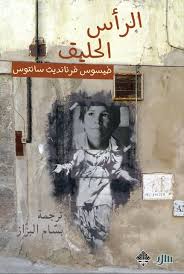
In this book there are pictures from the world of childhood in its openness to the world of adults, snapshots from the lives of children who receive their first lessons in the school of life and survival, and for the first time look out from the window of their reality and their ages at the world of adults and the prospects for the future that are shaped by an important historical and social stage, which is the Spanish Civil War: Seriousness, fun, drinking, singing, an atmosphere of war, and the sound of bombs. Waiting for a father who will not return, abandoning homes, being displaced from homes, and crossing lines. A life in shelters, a life in mines, the dreams of youth, and teenage love
On Animal Farm, the horse Boxer believes everything he is told, and works hard day and night. This pure naivety paves the way for evil people to rule our world. Naivety is not infallible. Gullibility must be accompanied by intelligence, knowledge, caution and foresight. This is wisdom. To be wise, you must know evil and see it clearly, and you must also be naive enough to believe in your ability to resist it. Through his collection of stories, Uday Al-Zoubi seeks to raise a question about the limits of wisdom, and its relationship with naivety. Foolish, unwise naivety, and evil, unnaive wisdom, almost dominate our world, spreading confusion and darkness and making the world a dangerous, ambiguous mixture of things, ideas, and stories.
Poor awareness:
Poor People of Consciousness, a book that includes stories mixed with the bitterness of reality and the texture of imagination, where I narrated the events of the stories so that I could raise the problems faced by some groups of people and according to the experiences of souls who suffered from the injustice of suffering. Stories that captivate the reader and make him think about their details, live their events, and compare them with his mistakes if he finds a similarity in them, so that he can think and make a decision... whether to continue or to rise to the highest levels of awareness and be enriched by them.
The stories are not true, but the extent of the suffering is real and based on the reality of hearts that suffered from the bitterness of ignorance and the control of negativity, hearts that did not learn until they suffered and lost a lot, hearts that paid an abominable price for their ignorance of the secrets of life.
Stories that make the reader think
Stories that make the reader learn and educate
Stories for lessons and benefits
Stories that positively change the way minds think
Stories are not just for entertainment
Stories that elevate you to be among the list of rich intellectuals
Sometimes I wonder, why don't we learn until we hurt? Why cannot we learn from the mistakes of others and reach the stage of awareness? It is true that experiences increase our experience in life, but why do we not make awareness reach maturity by learning from the mistakes of others and striving towards positive change in our lives?
The goal I seek in telling these stories is not just a narration of events, but rather to convey the ideas and lesson from each story to the honorable reader, as life is about lessons that we learn from the experiences we go through, and in the end the lesson is not to repeat mistakes and enhance awareness of the positives.
My prayer is that everyone will benefit from reading the stories I mentioned. A person may see himself in a similar situation and may think I mentioned it, but that is not the point of publishing the book.
We are a generation without farewell, says the German writer Wolfgang Borchert, summarizing the tragedy of his generation that was led into World War II without anyone saying goodbye to it. Perhaps Borchert is the voice most capable of expressing this generation, and that war that left massive material and spiritual devastation in Germany. It also left literary ruin.
Borchert left behind a collection of short stories that his fellow Nobel Prize winner for Literature, Heinrich Böll, describes as “complete masterpieces,” while Egyptian writer Ibrahim Aslan sees in his stories “a sublime expression of the ferocity of all wars without a single direct word.”
In this book, we present to the reader a selection of these stories, and what attracted us to them is the human approach to major topics, such as war and death, love and the feeling of loss, and the artistic expression of them.
Rabbits emerge from jacket sleeves, a car fixes a shed instead of a pole, and medical cotton speaks and makes sounds; These are some of the daily observations mixed with audio-visual hallucinations, narrated by a young drug addict, through a group of separate, connected short stories that describe the image of a world in which wakefulness and sleep are mixed, and reality and imagination.
In these stories, everything moves slowly, and the world is seen through a blur; As for death, it seems like a joke, even the feelings become numb; So that one laughs when one should cry.
Without lacking a sense of humor and bitter banter, Dennis Johnson presents in this collection an honest testimony about the lives of young addicts in the United States of America, and despite all the laughter and smiles generated by the book’s funny characters with their jokes and behavior, perhaps the reader will wonder at the end: Why does he feel this way? All sadness? It is a book written in the mouth of addicts, not about them, and describes their alienation and their connection with the world that is gradually fading.
From a meeting between Mihai, who is spending his honeymoon in Italy, with an old friend, the events of this novel begin. He soon finds himself leaving his wife at a train station, and begins his own journey, searching for himself and the memories of his youth. Traveling from one city to another, Mihai experiences the anxiety of his existential questions, and meets friends of that period. He learns the reason for Tamas’ suicide, and Eva’s relationship to this incident, but what does he really want from recalling stories told by time?
In this novel, which is considered one of the most prominent Hungarian novels in the modern era, which achieved great success, was translated into several languages, and was adapted for theater and cinema, the reader feels as if the author is able to penetrate his depths, and not only the depths of his characters.







-1717716819.jpeg)