Voices...Freedom of opinion and respect for others
35 AED
35 AED
0 Reviews0 sold
Product Details :
An electronic platform that launches from the Emirates to the world with an Arab vision, national visions, and a clear strategy derived from conscious, solid, solid thought, and promising steps led by pens with mature, sparkling white fingertips.
2 votes: An electronic platform that launches from the Emirates to the world with an Arab vision, national visions, and a clear strategy derived from conscious, solid, solid thought, and promising steps led by pens with mature, sparkling white fingertips.
Candles extinguished by fate
A book that tells true stories of young people who lost their youth and mothers who suffered the pain of loss and separation.
A book that teaches us how to overcome our sorrows and be content with God’s decrees.
I wrote the ideas I wanted to convey...what I wanted to reveal...this is a revelation...displacing talk from a heart full of goodness and burdened with silence...perhaps I did not follow the method in which books are written...because...oh dear reader...oh human being. Whether you are male or female, I did not write for someone to evaluate me and to gain appreciation from some and criticism from others, while being prepared to accept and welcome it if it is constructive, honest, and purposeful.
But I am writing to dialogue with you.. to exchange with you.. to chat together.. respond to me as you read.. talk to me.. address me.. I hear you, understand you, and listen to you.. object.. disagree.. and agree.. make me a person close to you.. a friend. Dear to your heart... and do not judge me... leave the judgment to the Creator of the universe... respect my difference from you... and accept my belonging to my human, cultural and intellectual identity... and remember that we are all from Adam... and Adam is from dust.
I promise to respect and appreciate you and thank you for choosing my book and adding it to your precious list. Take care of it and put it in a warm and beautiful place.
Thanks ..
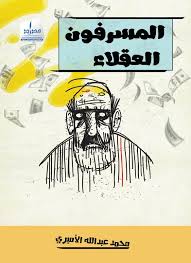
The book addresses some of the financial issues prevalent in our society in a short collection of true stories to educate and educate individuals. It begins with a conflict between “reason” and “society” over the group of creditors drowning in a swamp of debt, where “society” ignores the circumstances of that group while “reason” goes on a short trip to find out their stories and what their circumstances are, then offers solutions to the creditors, and benefits from the experiences of those who survived them in order to prove Society has the idea that these individuals are capable of change and emerge from the darkness of debt into the light of success, eventually calling them “reasonable spendthrifts.”
About the book – A Date with the Sun
“A Date with the Sun” is the date that I chose one day to shine on the radio airwaves, and through it I meet loyal listeners, for whose sake I have always been keen to be present every morning, overflowing with love for this country, to present to you everything that is special and new through exceptional topics and guests, and topics that are: In fact, touch me as it touches you. We both agree on the date that the sun does not shine, and that happiness is only the beginning of optimism in every goal.
Today, the radio appointment is born again in your hands, with the release of “Appointment with the Sun”, this dream that I once wished would reach you, and I dedicate it to you, because you are the ones who deserve to re-read the beginnings of every morning, the ones that I made sure to prepare for you with love and longing, while hugging... I took the microphone with passion and from the heart, so I wrote to you a lot of love, happiness, positivity, and hope, and I researched for you a lot of studies, quotes, and the country’s achievements, to collect them today and have them in your hands, a readable copy of my voice that is “a little” far away from you, the one that you hear as you read, and most importantly, you live the moment and smile. Through a version that collected a collection of editorials for 64 episodes of the radio version.
The book “A Date with the Sun” is a reflection of the “A Date with the Sun” program, a new experience entitled “When Happiness Has a Date.”
Amal Al-Halyan
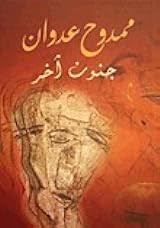
After trying my previous book, “In Defense of Insanity,” it occurred to me to do it again. The issue, in brief, is that I select from things that I have previously published in periodicals or introductions to books, what I consider to be valid beyond their time.
This book is not a continuation of the previous book, but rather a continuation of it.
It contains Lee's opinions on art, culture, journalism, women (and some politics). The question that confronted me in my first book confronts me now: What do these articles have in common?
The answer is as naive as I answered earlier: What unites these articles is that I wrote them.
The opinions here are my own, which may mean nothing to some of them, and may not mean anything to others. But it was important to me, myself, to say these opinions, and to record them, and among them was a farewell to figures like Assi Rahbani and Al-Dhahirah Rahbani, and even a farewell to a number of friends who had passed away, and who had passed through my life only briefly. Perhaps some bitterness still exists here as well. Upon reviewing the articles, I discovered that I was insisting once again on the losses that had befallen our lives. These are losses greater than military or political defeats. It is our constant humanitarian bleeding. And the one who gives us life...or makes us mad.
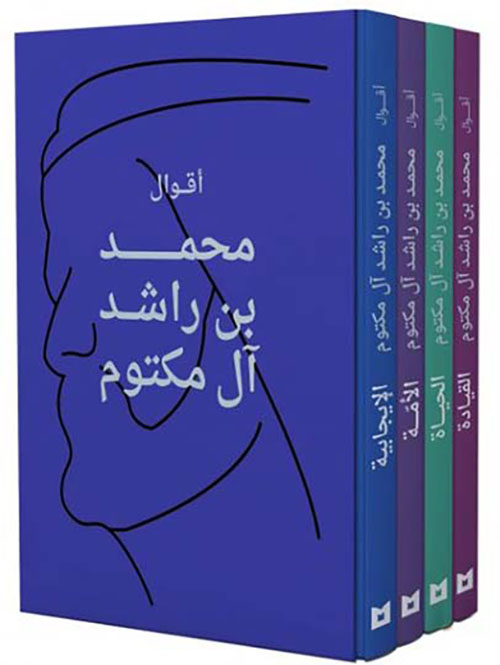
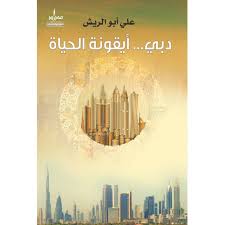
The book talks about Dubai... the city of dreams, the city of beauty and its founder, Sheikh: Mohammed bin Rashid Ali Maktoum, and we quote from it...
Tamer of life's riders, spoiler of horse cravings
With the wisdom of the desert, I enriched the lush horses and took care to name them until they appeared in time as a legend that walked on the lashes of sand with ease, and went slowly to ascend to glory with every effort. Under its spikes, the earth moved, and I was rewarded for its command, patience, secret, and effort. And you were the knight who was the appropriate guardian of the dreams of the wise and the pens of the nobles, and you, sir, were like your impeccable poem, taming the great horses and passing on longings for ages.
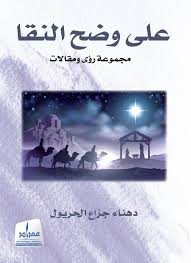
We change, our ages increase, our features undergo age changes, and even our ideas change with time and differ, or may even change completely and be undermined by ideas that contradict them.
In this book, I put some of my opinions and thoughts at a certain time, and I do not know what might come out of them in the future.
I made it under the name (Ala Wadh al-Naqa) from the clarity of purity, which is a popular Bedouin word that means that the matter be honest and pure, with no shade on it, just like what I am trying to present without falsification or embellishment, at least from my point of view.