Articles in which I try to put points on some values and ideals, which have been scattered amidst the noise of civilization, civilization, and globalization, and under the name of progress and development, which has caused the destruction of some of the foundations of our conservative society.
I highlight what matters to me, and what matters to my community and my family, trying and diligently reminding myself first, and reminding those who read my words that our role is great and great in preserving this precious country.
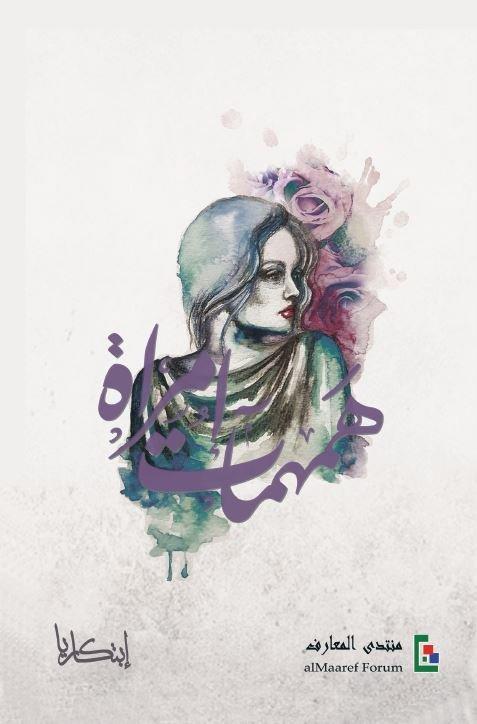
As you will see, my strong focus is on women, as there is no hatred for them, bias, or inclination towards men, but rather my belief in them, that they are the basic building block of the family and society. They are the nurturing mothers, they are the appointed wives, and they are the daughters who are future teachers, if women reform, preserve their authentic heritage, and hold on to It is the essential foundation for the good of society.
As you will see in my writings, some of the local dialect, which I deliberately mention, because I believe that it has a greater impact on many groups of society, and this is only my desire to have this book reach the largest possible number of people, and for many common people to understand what I am aiming at. And just as I took in my writings the character of the talk of councils, in terms of discussion and presentation, and in terms of style, some of it eloquent talk and some of it local, so that it easily reaches minds and hearts, and I hope that I have succeeded in combining them, and just as I have tried to condense as much as possible without prejudice. On any topic until it has complete understanding and meaning, I ask God for ease, success, and guidance.
In her collection “The Lover of Nothing,” which is a renewed edition of her collection “My Heart is Half a Shining Moon,” Latifa Al-Hajj travels the reader once again to the places she visited in Turkey, the country that fascinated her from the first visit and in which she experienced different feelings. She writes to us from the air about a close meeting and an awaited dream, and in front of a running waterfall, she describes the joy of nature around her, and the joy that overwhelms her in its depths.
She describes sleep escaping from her eyes in the evening, and the sun yawning on the bed of the sky in the morning, about love and the moon, near which a blue butterfly resided, and in her easy, delicate language, she describes to us her longing, longing, and waiting for love and the beloved.
From the group's texts:
My heart is a bright half-moon / Poetry writes itself in my heart / Dervishes are not looking for relaxation / Your last selfie / Take me back to the child / To you I will fly / What joy / Greetings from the waterfall / Dark dreams / Far away as a star / Everything is beautiful, everything is happy / The soft criminal He sings in Yalova
Flashes of conscience:
Pictures in the form of flashes emanating from the author’s conscience, which he shares with the reader to build positive energy within him, through motivational phrases, positive thinking, and moral psychological rules that enable him to overcome obstacles on the path of his life, fill it with happiness, and do the impossible to achieve success and happiness, and shine in dealing with others.
No temporary address:
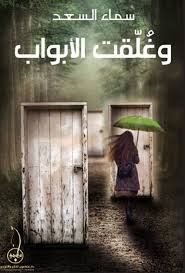
The book carries a sublime message that a young woman wanted to convey, despite her young age. However, life has taught her enough lessons to make her decades ahead of those of her age. The book is a bridge between the writer’s heart and the hearts of the people, so that she can express through it the “lesson” that makes us obsolete about the existence of a person. He guides us to it, and it is enough for us that words are able to console us and paint a picture of happiness in our hearts.
Sayings that freed my memory:
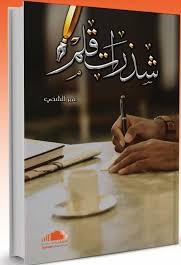
Sayings from an inspiring soul are deep meaning sayings from my thoughts that I received from the experiences I lived, so I decided to write them down and collect them in this book with an introduction and presentation containing 71 sayings and a conclusion, which is an excerpt from the introduction to a novel whose events I am still writing down.
In his book “Mirrors,” Eduardo Galeano retells the history of human civilization in his own way, condensing what he finds exciting, funny, and worthy of attention through brief, precise passages that give the reader the opportunity to connect with the events and facts he reads, as if history were resurrected before him. The author adopts a cornological path in narrating a history based on bitter paradoxes, and stops at cities, personalities, events, and inventions that constituted milestones in human history. This is how we see him moving lightly between various topics; Such as female circumcision, silkworms, beer, Santa Claus, tango, the torture instruments of the Inquisition. But through the illusion of dispersion, he somehow makes history more logical and full of bitter irony. With extreme selectivity and absolute freedom, Galeano, with his extensive knowledge, chooses the points that stand out to him that seemed to him pivotal in the path of humanity, specifically the forgotten events or people that the dominant narrative of history ignored and wanted to erase from collective memory, as if he was saying to the world: “See your true face reflected in... Mirror".
My dreams are forgotten:
Scattered thoughts running through my mind, touching what's inside me,
I narrate it for you and for him, write it in simple words so that it reaches your heart, in a sunset hour when feelings are silent...
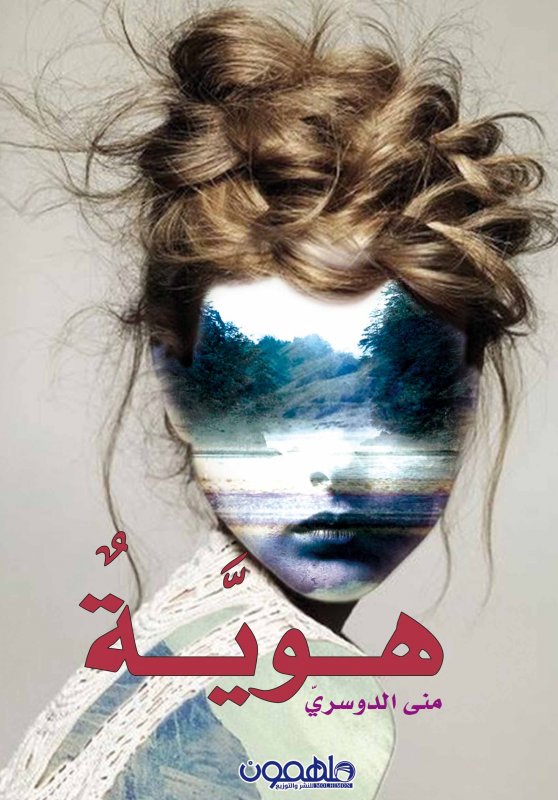
“My Forgotten Dreams” began at the age of fifteen. The little girl began to express her feelings and dreams in letters until she matured and changed into a dream, and her literary texts began to touch human concerns.
Al-Dafina talks about human topics such as love, hope, betrayal, alienation, and neglect. For the sake of this dreamy girl and this mature woman, I present to you a summary of my feelings and dreams.

If the novel is an imaginative inspiration for events that actually occurred, and the diary is the actual documentation of its writer’s vision and view of the events as he experienced them, then the text of “An Incomplete Piece of the Damascus Sky” goes further than a marriage, but rather is closer to the dissolution of the arts into each other’s details. Poetry and prose, a fictional novel or the diary of a living being, details for each person and a generalization that does not concern anyone. Crying is like loud laughter, at a sentence that surprises you despite the expected context, but that exceeds every possibility proposed by your imagination.
* Ahmed M. Jaber - Al-Arab newspaper, London
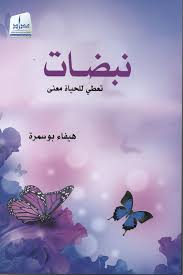
Pulses...give life meaning: Some of the pulses that pulsate human souls every day... give them determination and courage amid the battles of life, and provide them with a ray of light from the past, present, and future that makes them hope that what comes next will be more beautiful.