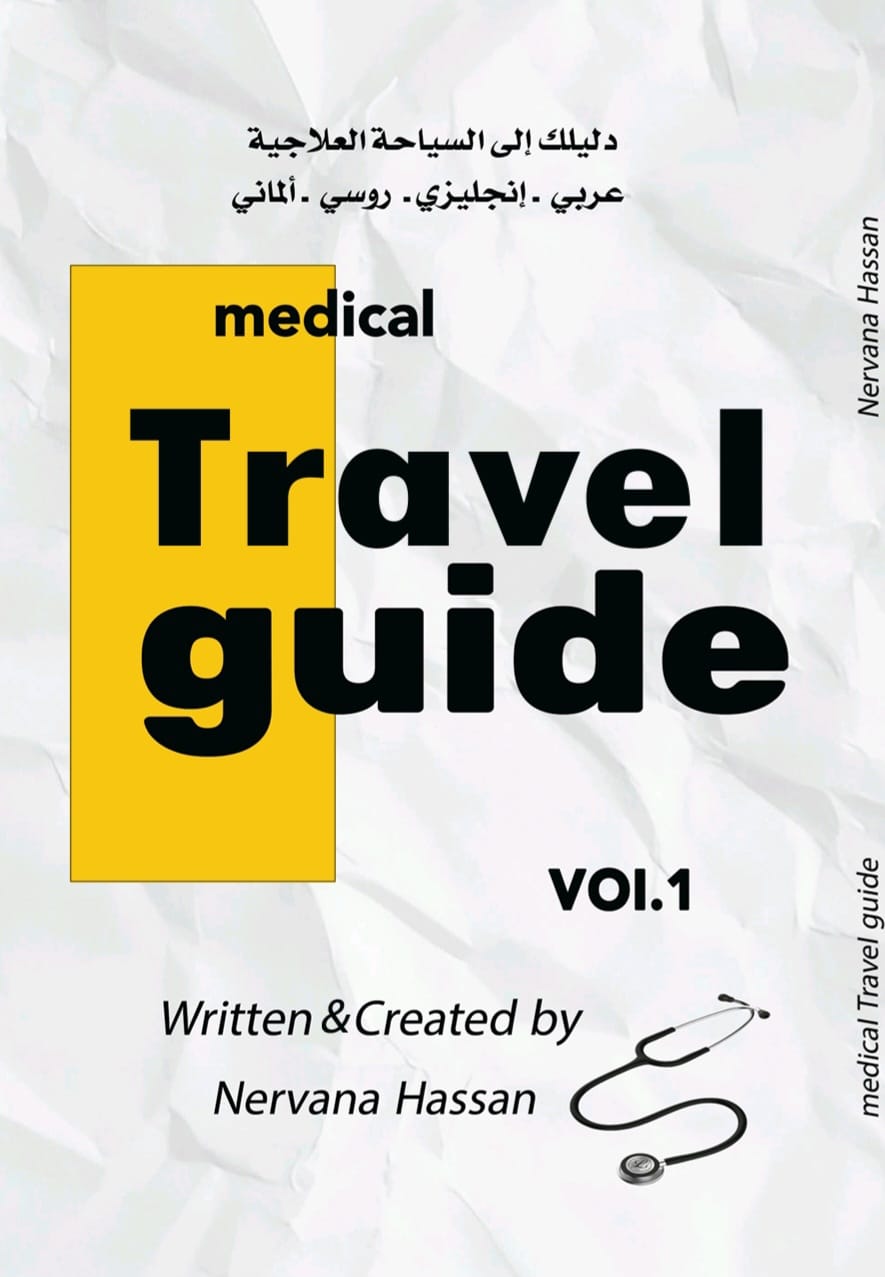
comprehensive reference designed to help patients and students understand medical terms and diseases in four languages: Arabic, English, German, and Russian. This book serves as a practical tool for anyone who needs to communicate medical concepts in different languages, whether for treatment abroad, academic studies, or professional use in the healthcare field.
The book simplifies medical terminology in an organized and accessible manner, allowing readers to find medical terms in their native language alongside translations in the other three languages. This makes it a valuable resource for immediate use in hospitals and clinics during travel. It also benefits patients who struggle to express their symptoms in a foreign language, facilitating clearer communication, accurate diagnoses, and effective treatment.
Additionally, this book is a valuable reference for medical students, helping them learn disease names and medical terms in a structured and clear way. It goes beyond simple translation by ensuring a proper understanding of medical terms in multilingual environments. This makes it an essential tool for anyone who needs to engage with medical concepts in a language other than their own
Russia witnessed several revolutions, unrest, and bloody civil wars at the beginning of the twentieth century, resulting in the emergence of the Soviet Union, which formed an image of the great and invincible empire.
Some saw in it the fulfillment of the red socialist dream of building a superpower whose influence extended over almost half the world. While some saw it as one of the harshest forms of oppressive totalitarian rule, with huge detention centers and a difficult economic situation.
In the year 1991, this empire collapsed rapidly after several revolutions, unrest, and bloody civil wars, and the red man woke up to suddenly find himself living in the ruins of an empire collapsing into dozens of conflicting countries, witnessing a massive economic collapse and the end of the great dreams he had lived.
In her book, Svetlana does not search for answers to the big questions that interest the reader of history, but rather for thousands of small details of past daily life by collecting dozens of testimonies from ordinary people who lived this experience and its ups and downs.
Svetlana searches for the small night conversations that disappear with the morning, for the dream of a new future, of another time. However, it is the same time repeated; Used time..








/ مستعمل (نوبل للأداب 2015)-1717685694.jpg)