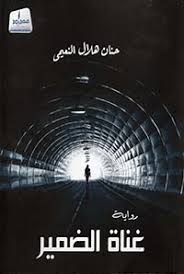
Richness of conscience:
It is a strange thing for a person to live in the confusion of love and the madness of longing, and at the same time the heartbreak is stronger because of that pale conscience that is inevitable.
Are human hearts as hard as stones?
Is it possible for remorse and remorse of conscience to awaken within them one day?
I am the companion of the silence that killed me years ago!
I suffer from all my hopes that have not yet been fulfilled
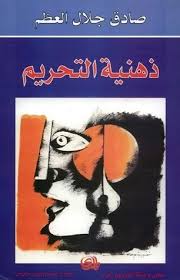
Sadiq Jalal Al-Azm takes the controversy and controversy raised by Salman Rushdie’s book “The Satanic Verses” in the late 1980s as a starting point to address what he calls “the mentality of prohibition and the logic of criminalization” among Arab thinkers, in a panoramic manner, and in other articles - added in later editions of the book - he addresses many of the issues Related issues, such as Orientalism, reverse Orientalism, concepts of cultural invasion, and authenticity. The writer dives behind the implicit meanings, trying to reach the essence, or the real motive behind the issues he discusses, and raises his voice loudly to argue and discuss the opinions of his fellow researchers and intellectuals: such as Edward Said and Adonis. The audacity makes these sober articles an important document of the discussions and dialogues that prevailed among Arab thinkers at that stage, even if one does not agree with any of them. What is important here is the celebration of free thought and debate based on diligence and knowledge.
Although the deep, passionate, and enjoyable discussions contained in this book provide many answers, they also stimulate many renewed questions that continue to trouble us and justify our need for readings of this kind.
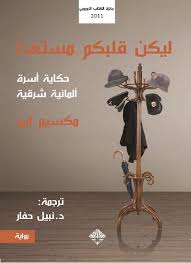
The rise of the Third Reich, World War II, the fall of Nazism, the disintegration of Germany, the rise of East Germany, the fall of the communist states, the fall of the Berlin Wall, the disintegration of the Soviet Union. Terms that may pass over in history books, but they carry dozens of questions: What really happened? How did families who found themselves on opposite sides, divided between opposing ideas and warring countries, live? What does it mean to live in a country that suddenly disappears, and the enemy becomes part of the homeland?
The first thing Maxim Leo learned was to refrain from any questions, even about his family history. Twenty years after the fall of the Berlin Wall, he too decides to break the wall of silence in order to understand what really happened there, with his family, with his grandparents, with his parents, and with himself. To answer the most difficult question: What was so important that it made us strangers to each other even today?