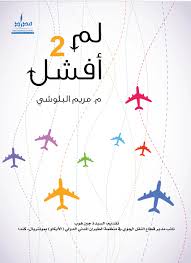
I did not fail 2
A book on development and motivation that focused on the period of assignment at the International Civil Aviation Organization in 2010, which is one of the United Nations organizations, and the many confrontations and challenges that occurred during this period with various nationalities, the period of intellectual transition to internationalism and the establishment of a negotiating personality, which was rejected on the day of travel until it became A chief negotiator with a vital file who travels to many places. The book also discusses periods of frustration, success, and learning from many Arab and foreign figures. Post 2010
An overview of the book The Road to Institutional Innovation
In a time when competition between commercial companies in various parts of the world has intensified and the speed of changes has increased dramatically as products are renewed very quickly, you will hardly buy a modern electronic device or a car until you hear of another product on the market that has more specifications or higher quality. To the point that many people have become an annual habit of changing their smartphones because the producing companies do not stop making changes and developments in the products. The matter is not limited to products only, as well as services. Every now and then we hear of a new service provided by organization X and another provided by organization Y, and so on. Until the customer sat at home and received all the products and services that came to his mind from all over the world. This acceleration emphasizes the necessity of institutions adopting innovation, whether it is innovation in products, services, or processes, in order to continue making profits and not declare their loss or bankruptcy. Innovation is what enables an organization to remain competitive and provide innovative new products and services that attract customers and achieve profits.
Many people use the word innovation on a daily basis, many managers demand innovation from their employees, and many new entrepreneurs aim to achieve innovation. But if you stop someone and ask him about innovation, its dimensions, and the factors affecting it, you will often get a simple answer that reflects a superficial understanding of innovation, or a wrong understanding of innovation and a lack of awareness of its various dimensions. In this book, we will gently navigate institutional innovation so that the reader can understand institutional innovation in a deep way that enables him to apply it, whether in the organization in which he works or in his own projects. This book combines scientific and literary style. Many parts of the book are based on scientific studies and numbers, and many stories and examples are used to illustrate different topics. The beginning of the book explains innovation and its importance to institutions and answers a key question: Why do we innovate? Then we move on to understanding the innovation process from its beginning to obtaining the final product, in addition to understanding the types of innovation and its motivations. After that, we move to a deep understanding of the main factors influencing innovation, which are leadership, change management, institutional resources, and the work environment. The book concludes by explaining the administrative and personal obstacles to innovation.
Author: Dr. Hassan Al Bishr
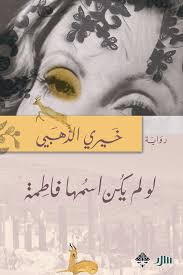
Salman visits the dead cities to make a documentary film about them, those cities that were symbols of ancient civilizations, before they became cities of broken columns and stone remains. But he finds there, in the house of one of the city's elders, a painting of a wounded deer, signed by his mother, "Fatima." Soon, the owner of the house presents him with possible scenarios for his film, all of which revolve around “Fatima,” and he finds himself entering a magical world and a confusing maze as he spies on the hidden faces of his mother, realizing that he only knew one face of her.
In this novel, Khairy Al-Dhahabi manipulates times and multiple voices to write about dead cities and Fatima with its many mirrors. Who is she? What is its truth? What is the secret of wishing? “If her name wasn’t Fatima”?















-1718340504.jpeg)
-1772316620.png)