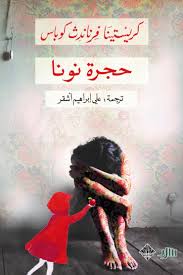
Cristina Fernandez Cubas does not introduce her heroines to us easily. She takes us on straight paths at first glance, and at one moment, she turns everything upside down. We discover that her characters are torn between two realities, the separation between which is very precise: the fixed reality, and the imagined or delusional reality. . One of them overpowers the other at times, and at other times a reconciliation occurs between them, without us knowing which of them truly exists, and which of them does not exist.
“Nona’s Room,” which won the Critics’ Prize in Spain (2015) and the National Narrative Award (2016), is a magnifying glass through which we see the complexities of the human soul and the mystery that surrounds our lives without us always succeeding in observing and understanding it. In it, “Cubas” reconsiders childhood and maturity. And loneliness and family, revealing to us that nothing is really as it seems, writing all of this in transparent language and in a unique style that gives it a detective touch, with skill and lightness.
يعدُّ هذا الكتاب من الكتب القيّمة في ميدان التربية الخاصة من حيث التناول في موضوعه وهو "الإدارة الفاعلة لمؤسسات الرعاية الإنسانية"، فكم من مؤسسة، أو هيئة، أو جمعية، أو منظمة معنية برعاية وتأهيل المعاقين كان أداؤها دون المتوقع! بالرغم من امتلاكها لميزانيات ضخمة، وطاقم فني محترف في عمله، إلّا أن عدم مواكبة الإدارة للممارسات العالمية الحديثة في مجال القيادة المؤسسية أدى إلى انخفاض ملحوظ في أداء تلك المؤسسات المعنية برعاية الأشخاص ذوي الإعاقة "أصْحَاب الهِمَم".
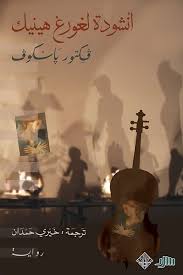
Georg Hennick is a famous violin maker. When his life was coming to an end, he decided to resist oblivion and challenge life as a whole, in the name of art, by making an unconventional violin, unlike any musical instrument made before, to fill the universe with unrepeatable tones. As for Victor, the child who tells us this story, he met Grandpa Henik for the first time on his fifth birthday, when he got his first violin. He then met him many times later, and a great friendship developed between them.
In this novel, Victor Baskov writes, in a musical style, a warm story about art, the passage of time, the shadows of loved ones, and Bulgarian society and its diversity.