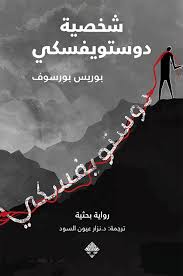
In everything Dostoyevsky wrote, he was writing about his spiritual research and exploration, and looking for solutions to the issues that worried him, but which would not be solved, as he himself clearly realized. And all of his heroes, including those who differ greatly from him in terms of his moral formation, struggle with the issues that Dostoyevsky himself wrestled with throughout his life. He is the spiritual father of all his main heroes, meaning that he represented a model for them. There is not a single person, among those whom he created and created, who did not copy him from himself, even if in a different way.
The life of a great personality becomes intelligible to us to the extent that we are able to delve into it, with one look, in the full diversity of its characteristics, which are often contradictory, but stemming from a single root. If we are not able to accomplish this, then in one way or another, in one way or another; We will simplify and impoverish this great personality.
If a biography of Dostoevsky's life was written without considering his novels, it would be worth nothing, and it would be impossible to restore the formation of his personality without his works. Dostoyevsky's realistic, experimental biography for understanding his novels is no less important than his novels themselves for understanding his personality. On the pages of Dostoevsky's novels, all of humanity's history, thought, and culture are revived, reflected in individual consciousness.
In order to understand the true importance of Dostoyevsky, which he has acquired in our time, a frank conversation is necessary.
The fuse of war ignites between the Monsalbes and the Barragans, a fierce war governed by only one law: blood for blood. As the two families seek to accumulate wealth through illicit activities, love with its presence creates deeds, changes paths, and creates mountains of words that people pass on about the members of the two families until they are no longer what they are, but rather what people tell and imagine. Thus begins the legend that became true from too much of it being passed on, or perhaps it is a true story that became a legend from too much of it being told.
With an interwoven narrative full of sensory details, drawing from the springs of magical realism, Laura Restrepo writes a novel that is brutal and sweet at the same time, an epic story about desire and betrayal, a myth about life and death crouching in the desert: “like a leopard in the sun.”