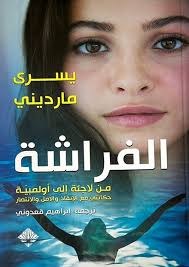
Since her childhood, Yusra Mardini’s dream was to become a professional swimmer and represent Syria in Olympic sports tournaments, but the intensification of the battles in Damascus in 2015 reduced her dream to just survival. Like tens of thousands of Syrians dreaming of living in peace, Yusra set off with her sister Sarah, and some of their relatives, on the terrible asylum journey to Europe, carrying with them their dreams of a safe life and resuming professional swimming, but in the middle of the trip between Turkey and Greece, the rubber boat’s engine stopped working. Work, and the boat loaded with passengers began to sink, and despite their many attempts to call for help, no one responded to them. Seventeen-year-old Yusra, her sister, and some other passengers jumped off the boat. To lose weight, they swam with it until they reached Greece, after which the sisters continued their dangerous journey overland to Germany. From swimming to save her life and the lives of her friends, to swimming with a dream of an Olympic medal, Yusra tells her extraordinary story from a refugee fleeing a war-torn country to an Olympian in the 2016 Summer Olympics in Brazil. ***** Yousra, we could not be more proud of you for your courage, your ability to resist difficulties, and for the wonderful example you set for children everywhere. Former US President Barack Obama
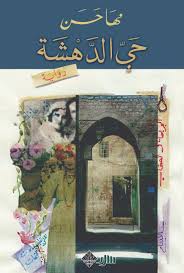
“Amazing is a hidden treasure in Aleppo,” says one of the novel’s heroines. In her work, Maha Hassan tries to bring this amazement through writing and memories to re-draw Aleppo and its ancient popular neighborhoods, its rituals of living, the simplicity of its people, and their small dreams, before the war comes and destroys all of this in its path.
Relying on a unique technique inspired by the names of Arab and international novels and the titles of the chapters, the heroes of “The Amazing Neighborhood” tell us their story from “Zarqa’s Imagination” and “Beirut Nightmares” to the house of “Sleeping Beauties.”
It is a story about love, childhood memories, intentional killing, the emotional placenta, and the role of literature in our lives
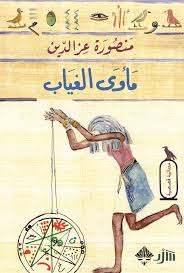
The shelter of absence is a place built of words. Everyone in it belongs to the world of his imagination, and lives in a state of obsessions and doubts. A scientist who surrenders to ambiguity and hieroglyphs and loves the mercury of impermanence and uncertainty. In this shelter, we do not know whether what we read are the preparations of the goddess of talisman, or if they are the same as the preparations of others. We do not know whether to believe her or to believe in the suffering writers who create themselves with the power of language and invent worlds and selves with words.
In “The Shelter of Absence,” we read about the wreckage of events and people, and about the brewing panic of perishing cities, in stories that belong to the imagination and the grotesque, as much as they derive from the devastation that occurs in reality as material for writing.
Critic Dr. Mohamed Al-Shahat believes that the narrative of “The Shelter of Absence” builds “on constructing an imaginative journey, with successive episodes, that questions the concepts of space, time, and human existence. In doing so, it searches for the essence of human communication beyond “language” in its common sense.”








-1718252536.jpeg)