Was it still possible to add anything about Al-Mutanabbi, who filled the world and preoccupied the people, throughout these centuries that extended from his birth until now?!.. And did there remain a side of him that had not been studied, examined, and examined in more than one way, nor was it subject to discussion and debate among the fans of this great poet? And between his critics and haters?!..
Al-Mutanabbi is a unique figure in our literary heritage. His lovers, readers, and memorizers of his poetry are more numerous than those who can be counted, and it is too dangerous to clash with them without prior preparation and readiness. They have extensive knowledge of his poetry and many of the stages and details of his life. Their zeal in defending or attacking it is immeasurable. Therefore, the prior image is more binding. The imagined picture of him that they drew for him is too attached to the imagination to be discussed. Its relationship with national identity is more rooted and dangerous. This is what makes attacking him, for many, an attack on one of the nation’s “values and symbols.”
But I am writing about Al-Mutanabbi after I spent two full years reading him, analyzing his poetry, and studying the details of his life in order to write a television series about him. Dramatic writing requires its author to penetrate as much as he can into the souls of his heroes in order to understand them, to imagine them in the situations in which humans might be, and to draw their reactions, with dramatic logic, as human reactions might be. All of this is within the framework of documented historical information.
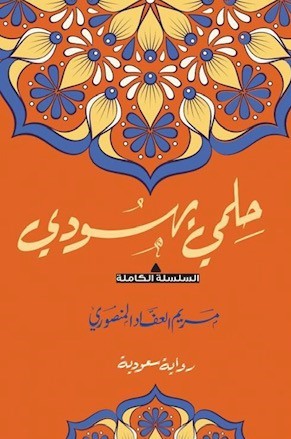
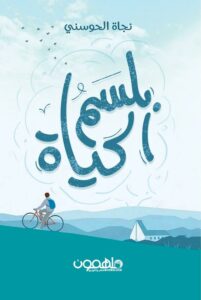
Its events take place in the village of Taiba in central Sudan, Gezira State, and its heroine is a beautiful and educated doctor who holds the threads of the narrative, expressing herself and the main characters in the story. She returns to her village after completing her studies, and makes major changes in the life of the village, and coincidence played a role in her taking the initiative to change. The village is lifted from its slumber within fifteen years, and then she discovers that she has lost her life and her beauty, and that she was loved by everyone, but she remained a spinster. She represents one of a group of six children to whom the school principal predicted brilliance during their primary school period, and through the narration she answers what It happened to them years after the prophecy. One of them was murdered and the other was murdered because of racist tendencies. The history of the murdered man, who descended from a grandfather who was a slave in the past. He dared to propose to the murderer’s sister. The discovery of the secret of the crime in the final chapters gives the novel suspense. One of them dropped out of school and inherited the butcher’s profession. From his father, and he discovered that he was cheating in his slaughtering, and was offering dead animals that had not been slaughtered in a legal manner. Then the climax of the crisis occurred when the doctor met her colleague whom she had left since she was a trainee doctor of excellence, and who was in love with her and had confessed his love to her in a letter thirteen years ago, to discover by chance that he had He lives in the same newly emerging metropolitan neighborhood, after she left the village to live in the capital in order to obtain a medical specialty. Then, leaving the village makes the village collapse and return to what it was, a remote village without lights, after she brought about a spring (change) in it that rarely comes. Because of her activity in the village hospital, He created confidence in its ability to treat the sick, the turnout of the people of neighboring villages, and the establishment of the village market, its expansion and the abundance of activities. The village expanded and took on a greater economic and social dimension, then it collapsed in less than a few months after the doctor (the protagonist of the novel) left the village after her shock and the collapse of her wedding when the police officers arrested her. The groom is arrested accused of murder
In his book “Mirrors,” Eduardo Galeano retells the history of human civilization in his own way, condensing what he finds exciting, funny, and worthy of attention through brief, precise passages that give the reader the opportunity to connect with the events and facts he reads, as if history were resurrected before him. The author adopts a cornological path in narrating a history based on bitter paradoxes, and stops at cities, personalities, events, and inventions that constituted milestones in human history. This is how we see him moving lightly between various topics; Such as female circumcision, silkworms, beer, Santa Claus, tango, the torture instruments of the Inquisition. But through the illusion of dispersion, he somehow makes history more logical and full of bitter irony. With extreme selectivity and absolute freedom, Galeano, with his extensive knowledge, chooses the points that stand out to him that seemed to him pivotal in the path of humanity, specifically the forgotten events or people that the dominant narrative of history ignored and wanted to erase from collective memory, as if he was saying to the world: “See your true face reflected in... Mirror".