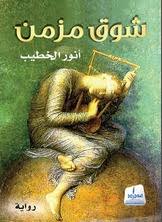
A brief overview of the novel Chronic Longing The novel centers around Salah, a character who is characterized by a captivating and different scent, and he has a strong attachment to his mother that reaches the stage of holiness in respect, love, and attachment. This appears in his conversation with her as he sits near her grave, which he returns to to celebrate her birthday, there, and distributes sweets to the graves in a surreal way. Symbolism. The first chapters talk about Salah, the adventurous and loving child who travels long kilometers to see a girl who lives on top of a mountain. He has not heard her talk or met her, but he loves her. He talks about his adventure with his friend Mustafa when they went to join the revolution to fight their enemy. She talks about Salah, who works at the newspaper and then leaves because he reaches retirement age. Najat, the director of personnel affairs at the newspaper, talks about this aspect, as does the security man who asks him to cooperate with him. Then the novel talks about Salah through the character of the cemetery guard, Fawzi, as well as through a woman named Salma. They both hear him talking to his dead mother, and then Amira, his childhood sweetheart, talks about him, who grows up, gets married, divorces, and meets him again. There is the character of Colonel Zahra, who summons him because of his attempts to transport his deceased mother and all the dead in the neighborhood to their homes due to being threatened. Salah organizes a reverse funeral that transports the dead from their graves to their homes, which is a symbolic funeral more than a real one, in order to preserve their memory as displaced people. It later becomes clear that Colonel Zahra is the same girl that Salah loved in high school. There is the character of Saber, who is the other side of Salah, who sometimes judges him and reveals some truths at other times. The novel restores consideration to man's relationship with his natural mother, his mother, the earth, and his mother, the cause, and raises the alarm of the disappearance of the memory of the displaced due to the practices of extremists who want to burn and plow the cemetery. Technically, the novel follows the short story approach, where each chapter constitutes a short story that the reader enjoys, but encourages him to continue reading.
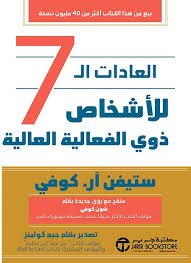
تدور العادة السابعة في كتاب “العادات السبع للناس الأكثر فعالية” للكاتب ستيفن كوفي حول التجديد الذاتي والتحسين المستمر. تركز هذه العادة على الاستثمار في النمو الشخصي وتطوير القدرات الذاتية باستمرار. وتشجعنا على العمل على أنفسنا وتحسين مهاراتنا وتطوير قدراتنا بالقراءة، والتعلم المستمر، والتدريب، والتجارب الجديدة.
Almost a poet's collection
After Greetings,,
This book includes a collection of Nabataean poems, some eloquent poems, prose, and free poetry as well...what was written down over the past years...
It includes approximately 72 blogs and reaches 44-45 pages.