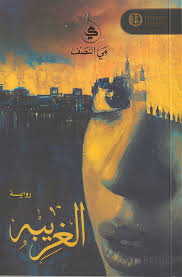
A university professor sees a painting in a museum in which a person very similar to his father is drawn, and he feels deeply that the resemblance does not stop at the symmetry of the two faces alone. A frightening intuition awakens within him, and he tries to meet a relative of the descendants of the man in the painting.
The novel's hero enters the maze of dream and wakefulness, and the maze of memory with its ramifications, evoking stories in which the real is mixed with the imaginary, and little by little we find that we are faced with several narratives, each one of which brings us into a new loss, until we ourselves become walking on the border between dream and wakefulness.
In “The Dark Bank,” José María Merino writes about the other or the companion, and about the past and memory, in a wonderful labyrinthine structure, within a vast time that lies on the margins of hours and pulses, and offers us pure pleasure that stimulates our imagination and senses.
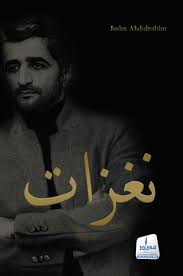
"This is freedom. It is a winter thing that cannot be tolerated for long. In it one must constantly move, as we do now. In freedom one must dance, it is cold and beautiful. But do not fall in love with it, because this will make you very sad later. A person only exists in the areas of freedom for moments, and no more. We have crossed the limit now. Look at the wonderful path on which we are skating, how it is slowly dissolving. You can now see freedom dying. When you open your eyes, this will be a haunting scene The heart is yours many times.”
*****
Walser treats language in this novel with as much respect as one would treat a revered and close friend at the same time. Hermann Hesse
"Jacob von Gonten" involves a kind of parody of the traditional educational novel.
Christopher Middleton
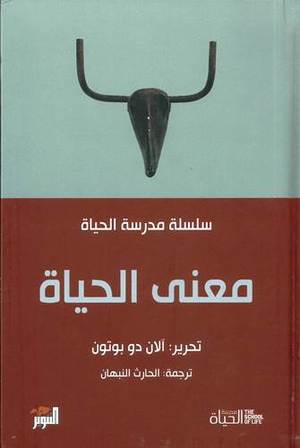
Contemplating the stick creates the impression that it does not mean anything. It is just a whip, thin or thick, depending on the personality and mission of the one carrying it. It may be made of bamboo, the limbs of a tamarisk or brown tree, or anything. It may be expensive, and a person may pick it from the ground. At no cost. But these things that do not mean anything carry meanings, and conjuring up the image of their presence among others may indicate to you that they are very important, and that they are everything to us here. In black Africa, in Australia, and among the inhabitants of the Alps, it is carried by the old, the young, and the elders of the people, and in the hands of the guard and the shepherd, and it is used by the cleric, as well as the magician and the sorcerer, and you find it solid in the military, moved by the music melody of the maestro, and in all parts of the world it is present, and in every tenses
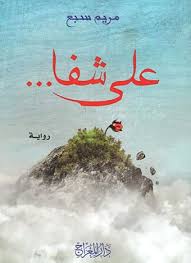
In this novel, “Sabwat Yassin,” we will see the fictional character of the intellectual divided into two characters, the character that the state created, fabricated, and presented as its true self. The original character who escaped from this dark fate went to the home of the religious people from whom he had tried to escape, and then to the community of the Non-Qabalan, a tribe seeking peace who had no dream except to escape from the Qabalan, the sons of Cain, the eternal killer.
Yassin escapes and flees, but the state is bigger, and we will read in the novel: “He looked again in the mirror... The face is a real Yassin, there is no doubt, no doubt, no worry about it. But what about this large number of Yassins in the mirrors, Yasin the face, Yasin the back, Yasin the right? Yassin on the left, Yassin al-Qadhali in front, and Yassin al-Yami on the left.”
Sabwat Yassin is an image of an intellectual torn between the dream of a universal culture and an oppressed society