Between a complex reality and an unattainable dream... between the eternal wheel of time and patience that is about to run out.
. You stand with your hands folded, exhausted with strength, with your eyes closed, barely listening to the groans of those lost in the darkness of existence, shackled in the desolation of the universe, immersed in the depths of confusion. Your eyes move inside two confused eyeballs, and your tears shed slowly... and soon they meet the heat of your body... and dry up in moments. Your heart stops speaking the truth, unable to describe people who are squeezing pain with every sigh, and floundering between false truths and consciences destroyed by the disappointments of fate. A world in which tones mix with screams, and eyes shine with their paleness, searching for a safe haven that resembles the paradise of eternity... evading brutally stabbing glances, and silence surrounded by explosive cords... You are still here, feeling the way to reach clarity of mind and purity of memory, selecting from your mind what makes you steal away... Life is a smile, and from the paintings is a drawing, and from the wooden shelves is a book called “Love.” It is the messy word in the minds of lovers. Decades have passed like summer clouds and none of them understood its complete truth. The love that sweeps through your body in three seconds, controlling the entire control panel of your head... to guide you to... A complete relationship guides you to marriage... to taking responsibility, understanding feelings, enduring problems, and making sacrifices.
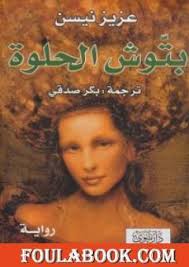
Sweet Batush, Batoul, Turkish Comfort, Mrs. Hard Coin, different names for one woman whose trace has been lost, and finding her alive or dead has become necessary so that her family can obtain a large estate inherited by the mysterious woman; The journey to search for her becomes an opportunity to discover the secrets of the high society of which Batoul was once a part. It is a journey of ups, downs, and transformations of a woman who manipulated everyone and took revenge on them in order to avenge an injustice after she hid a mysterious secret behind her captivating laugh.
In this book, Aziz Nissin directs his harsh criticism to expose the “rot” that has befallen the velvety layers of society, and the opportunism, vulgarity, and absence of values that prevail in them, but he does so by mocking the situations and paradoxes that make men blind their eyes to what they do not want to believe, and voluntarily surrender. To the deceptions and vicissitudes of a sweet Kaptosh playful girl.
هو الكتاب الثالث في سلسلة “شجون” لدكتور يوسف زيدان كنور يضيء ظلمات الجهل والخطل المعرفي فقط لمن أراد الى نور الفهم سبيلا. يطرح “شجون تراثية” مشكلتين إحداهما دينية والأخرى تدور حول تراثنا القديم. المعضلة الدينية تتمحور حول المسجد الأقصى والإسراء والمعراج التي طالما ذهب ضحية قضيتها المزعومة موتى كثر بالمجان وسيظل
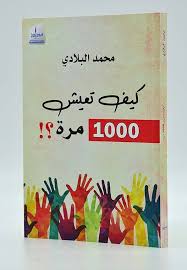
Are there really people who lived more than one life?! .. How and when did this happen?! .
At a time when violence and destruction overwhelm most parts of this planet, and news of murder and disasters tops every news bulletin... and brutal capitalism preoccupies the souls and minds of people, chasing after their own interests, and the number of the world’s wealthy people who have reached an unprecedented level in collecting money is increasing. In the midst of all this materialism and excessive selfishness, there are shining lights of humanity that go in the completely opposite direction. They are a different category of people, people who have dedicated themselves to giving, goodness, and charity, providing great services to humanity at the expense of their time and their own interests. People who still live among us after they were destined to live in the lives of those who came after them. People who were immortalized in history because they were high models of sincere giving to their communities and nations. They provided this universe with great services, values, and deeds that engraved their names on the corners of this planet that would not have lived, progressed, or arrived. It would not have been possible today if it were not for the gifts and services of the great prophets, messengers, scholars, and reformers, and even some simple people whose names have fallen from the pages of history, but they never fell from the comfort that settled their souls, the happiness that filled their souls, and the other lives they lived among those who came after them and benefited from their giving.
Yes... it is giving... that great human value that immortalized everyone who was attached to it and devoted to it... and gave to everyone who gave it.
All we hope for from this book is that it will be a source of inspiration for you to give in any form, at any size, and at any time, to join the club of great giving people. We also hope that the book in itself will be a simple gift from the author. It contributes to enhancing this great human value in our Arab societies, and is a very small step towards developing and improving life, and reconstructing this planet that the Great Creator has appointed us as successors in, and commanded us to strive to reconstruct.
Turning adversity into successes requires great courage.
This is the true message of the famous Pakistani businessman Sadruddin Hashwani, who chose Dubai as a place to manage his business, and this is one of the summaries of wisdom that we sought for the Arab reader to study through the translation of the autobiography of the great entrepreneur, in which he narrates his philosophy and his journey in the business world, which allows the reader During it, you will learn the treasure trove of success secrets, and the foundations of the path along the rugged paths to reach the highest levels of commercial and humanitarian excellence.







-1729342180.jpg)