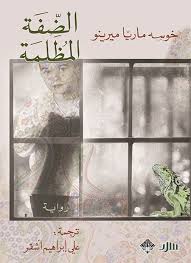
A university professor sees a painting in a museum in which a person very similar to his father is drawn, and he feels deeply that the resemblance does not stop at the symmetry of the two faces alone. A frightening intuition awakens within him, and he tries to meet a relative of the descendants of the man in the painting.
The novel's hero enters the maze of dream and wakefulness, and the maze of memory with its ramifications, evoking stories in which the real is mixed with the imaginary, and little by little we find that we are faced with several narratives, each one of which brings us into a new loss, until we ourselves become walking on the border between dream and wakefulness.
In “The Dark Bank,” José María Merino writes about the other or the companion, and about the past and memory, in a wonderful labyrinthine structure, within a vast time that lies on the margins of hours and pulses, and offers us pure pleasure that stimulates our imagination and senses.
Houses without doors:
The book is considered a message addressed to society to beware of intruding into social relationships and giving too much confidence to reveal the secrets and problems of family and marital life, which allows the sick of souls and demons of humanity to spread their poisons to tear apart safe homes.