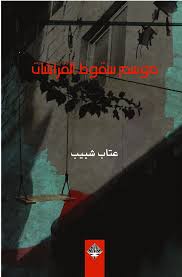
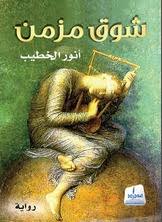
Like a serene scene trapped inside a crystal ball in an eternal moment of peace, the Syrian city of Homs appeared, calm and full of secret dreams.
It is crossed by a curious river that tries to rebel a little and break the dull, monotonous crystal, and it is called the Orontes.
Then the war came and the city was fragmented, and the butterflies flew with their dreams into the flames.
Every day of war passes, bringing with it dozens of stories worth telling. This novel takes us around the city, to learn more stories about it and its residents, a city that has become full of stories.
The story of a final basil seedling where Father France parked his old bike before he was killed. And the stories of library owners that were stolen.
A kiss from a friend that he printed on the glasses of (Wael Qastoun) after he wiped the bloody dirt from them
The mystery of the lover who covered the walls of the gloomy cemetery in Bouha (Lulu, I love you).
A sad hand under the rubble of a house that no longer exists.
There is no fair narrative in times of war, but the language remains an apology to the city
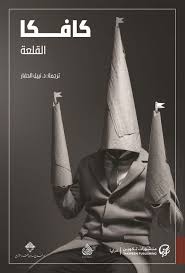
A land surveyor sent by an unknown person for some unknown purpose to the castle. The castle itself is an unknown place. It is not clear what he is supposed to accomplish there.
The novel follows his repeated attempts to accomplish his work. However, he cannot move beyond the ghostly surroundings of the castle.
He is never allowed to enter the castle. He also cannot return to his home. He is left alone as he faces the dualities of certainty and doubt, hope and fear, in his never-ending struggle as he moves from one maze to another.
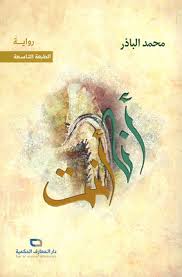
A brief overview of the novel Chronic Longing The novel centers around Salah, a character who is characterized by a captivating and different scent, and he has a strong attachment to his mother that reaches the stage of holiness in respect, love, and attachment. This appears in his conversation with her as he sits near her grave, which he returns to to celebrate her birthday, there, and distributes sweets to the graves in a surreal way. Symbolism. The first chapters talk about Salah, the adventurous and loving child who travels long kilometers to see a girl who lives on top of a mountain. He has not heard her talk or met her, but he loves her. He talks about his adventure with his friend Mustafa when they went to join the revolution to fight their enemy. She talks about Salah, who works at the newspaper and then leaves because he reaches retirement age. Najat, the director of personnel affairs at the newspaper, talks about this aspect, as does the security man who asks him to cooperate with him. Then the novel talks about Salah through the character of the cemetery guard, Fawzi, as well as through a woman named Salma. They both hear him talking to his dead mother, and then Amira, his childhood sweetheart, talks about him, who grows up, gets married, divorces, and meets him again. There is the character of Colonel Zahra, who summons him because of his attempts to transport his deceased mother and all the dead in the neighborhood to their homes due to being threatened. Salah organizes a reverse funeral that transports the dead from their graves to their homes, which is a symbolic funeral more than a real one, in order to preserve their memory as displaced people. It later becomes clear that Colonel Zahra is the same girl that Salah loved in high school. There is the character of Saber, who is the other side of Salah, who sometimes judges him and reveals some truths at other times. The novel restores consideration to man's relationship with his natural mother, his mother, the earth, and his mother, the cause, and raises the alarm of the disappearance of the memory of the displaced due to the practices of extremists who want to burn and plow the cemetery. Technically, the novel follows the short story approach, where each chapter constitutes a short story that the reader enjoys, but encourages him to continue reading.
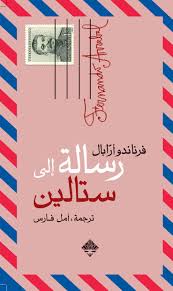
Using diminutive names, such as: “Soso” or “Koba,” Arrabal addresses the leader Joseph Stalin through a long, sarcastic and indignant message, dropping from him the qualities of greatness and deification, so that he returns to a child who deserves rebuke.
Employing his huge and diverse intellectual reserve, Arrabal delves into the details of Stalin’s life, starting from his famous mustache, passing through the women in his life, the spies and henchmen who worked for him, and the poets who immortalized him in weak verses, all the way to his victims, who were many, inside and outside the Soviet Union, and with Therefore, Arrabal does not reveal the sources of his information, nor does he differentiate between facts and fabricated details. He does not seek to present a truly historical document as much as he is interested in formulating a dialectical and moral argument.
Unlike his letter to General Franco, which he sent to the latter while he was alive, writing to a dead dictator may seem like an absurd and useless act, but Arrabal is in fact directing his letter to the living who lived with Stalin, or were influenced by him later, and he is trying in his letter, which seems Closer to a plea in a court; To say: History is unforgettable and cannot be erased.