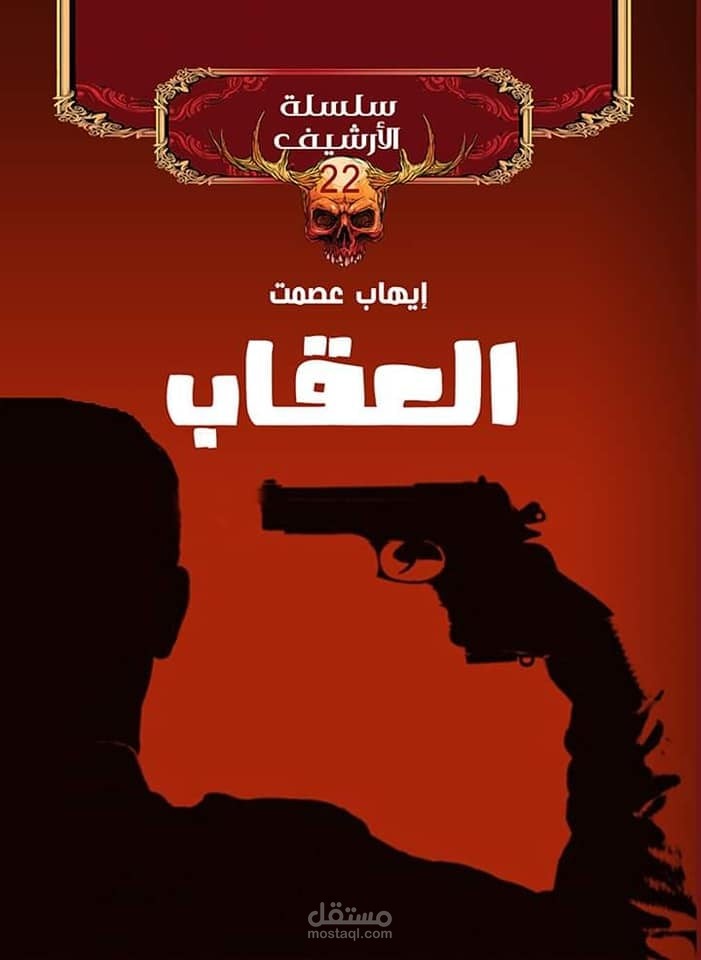
The little boy escapes from the midwife's hands, and all attempts to catch him fail, until Abu Muharib, a retired policeman who suffers from rheumatism, intervenes, using his old hunting experience.
The chapters of the story continue, until the moment in which the reader finds himself facing a world in which reality is mixed with its strict natural laws, and imagination soaring on the same wings that changed the course of (the little one’s) life with her presence first, and her absence next..
What wings are these where scissors, scalpels, knives and guns lurk?
Who are those howling in the background?
What fate did those living below end up with?
The novel raises many questions, then stops at this point, shirking the burden of definitive answers, and assuming that the reader will not be let down by the wings of his imagination in reaching an answer.
يقدم لنا كتاب محاط بالحمقى رحلة فريدة في أعماق السلوك البشري والتفاعلات الاجتماعية، يتناول هذا الكتاب ببراعة كيف يمكن للأشخاص المختلفين في طريقة تفكيرهم.
عن الكتاب في هذا الكتاب محاولة لاختزال ثلاثة آلاف سنة من التاريخ الإنساني بقصص منتقاة عن كيفية اكتساب المرء القوة، أو تفهمه لها من مختلف جوانبها، أو حماية نفسه من عسفها وتسلطها، أو الحفاظ عليها وممارستها بحكمة وتعقل، أو تحييدها واتقاء شرها.
Its intellectual value. Russell was committed throughout his life to working to change the world in which he lived, and to addressing the public in a clear, rational manner. This is one of the intellectual virtues of philosophy: explaining, clarifying, simplifying, and opening the way for everyone to participate in the process of changing the world. The articles revolve around three axes: First, freedom: Throughout his life, Russell defended freedom of expression in the face of extreme religious and nationalist beliefs. His battle was to defend freedom of expression regardless of the oppressive force. This basic principle was one of the focuses of his thinking about politics and ethics. Secondly, religion: Russell criticized the Bolsheviks’ suppression of believers, and he also criticized the religious people’s suppression of atheists. His position on religion stems from a principled commitment to freedom of expression and faith. Third, rationalism and philosophy: Russell defended rationalism throughout his life, and refused to believe in any issue or opinion that was not supported by evidence in a clear, rational manner. On the other hand, mainly following Hume, Russell holds that reason has limits, and that the rationalist position also requires that we accept that our understanding of the world is limited by the limits of reason
The message of forgiveness, a contemporary formulation
65 AED
115 AED
0 Reviews0 sold
Product Details :
Based on this wish for all Arabs to read what they are able to read, from ancient heritage to modern antiquities, I returned to (The Epistle of Forgiveness) to place it in the hands of senior scholars, intermediate scholars, and those below that. But how do we return to it with passion, eagerness, and the ability to benefit from it after readers have moved away from it until there is no place left for it except in the farthest corners of libraries because it cannot be read no matter how much we tempt people to read it? Would they not be repulsed by it and flee from it as they would from a heavy burden, even if you gave them a generous reward for reading it? Here I came up with an idea that I hope will resonate well with people and students of culture, which is to reformulate it.
It was necessary to include the text (Ibn al-Qarih’s letter) because the letter of forgiveness was a response to it. It is not possible to understand (forgiveness) without considering the message of (Ibn Al-Qarih). I treated it in the same way of paraphrasing so that the two messages fit together.