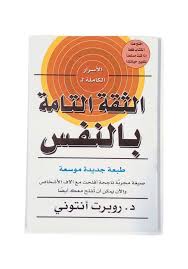
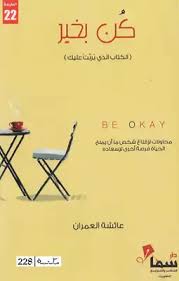
تدور العادة السابعة في كتاب “العادات السبع للناس الأكثر فعالية” للكاتب ستيفن كوفي حول التجديد الذاتي والتحسين المستمر. تركز هذه العادة على الاستثمار في النمو الشخصي وتطوير القدرات الذاتية باستمرار. وتشجعنا على العمل على أنفسنا وتحسين مهاراتنا وتطوير قدراتنا بالقراءة، والتعلم المستمر، والتدريب، والتجارب الجديدة.
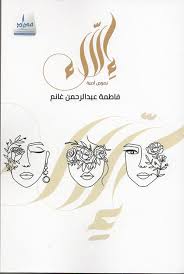
I lost you in India:
A beautiful novel with an unusual story that contains challenge, determination, romance, loyalty and sacrifice between two completely different worlds and nationalities.
Its events are based on reality and imagination, and it takes place through three heroes who play major roles in the novel. You will enjoy it very much, and it will draw you from the dedication page until the end.
The events of the novel take place in the eighties and nineties between the UAE and India
This journey of yours will be unlike any other journey. It is more like a journey of the soul in its cruelty and sweetness in a country that was more like the journey of the whole life, from birth to death.
Which is victorious, love or arrogance and pride?
Half of the events of the novel take place in the palace of Nasr al-Din Shah, where the writer will take you to wander through its corridors and get to know its heroes and servants. You will live in its corners. You will rejoice in the joy of its heroes and your eyes will overflow in its moments of sadness.
The heroes will go through many poignant events, between love, pain, and gentle comedy
Human comedy:
By “human comedy,” I mean what I understood while I was still young, crude, and inadequate, namely the absurdity and amusements of human beings. Rather, I go further than Aristotle did in his definition of the word comedy, where he said: (Comedy is what causes laughter, rather than the defect that does not cause pain). As for me, I mean by comedy here, it is immorality, farce, play, contempt, recklessness, confusion, and the chaos of humanity, and there is no laughter in it. For me, comedy does not inspire reverence like the comedy of the Greeks or Dante, and it does not call for laughter like the comedy of Aristotle. Rather, it is a funny, crying comedy because of its contradiction and absurdity, and to those who say that humanity has accomplished a lot, I say that even if there are any notable highlights, achievements, or progress, they are the results of random interactions, scrambles, and quarrels that are unplanned and unplanned, like a gambler who sometimes wins and often loses, but it is an ungrateful gain. Or he should be praised for it, but it did not come from thought or action. Rather, it is absurdity, experimentation, and play.
Zarb Al-Dabsh...
The Emirati writer, Juma Al-Laim, takes us to the world of Emirati heritage, in his novel recently published by Madad Printing and Publishing House, where he takes us between his lines to the old Furjan of Sharjah, in a narrative attempt to restore some of the images that are filled in the Emirati popular memory, about the period that witnessed the beginnings of transformation. Change and reform, and the period after the establishment of the United Arab Emirates, which embodied the aspirations of the people of the Emirates for a dear and civilized homeland.
In his novel, the writer focuses on the main hero in it, who is Abdul Rahman, and some of the contradictions and challenges that he experienced, like other young men at that stage, dealing in an interesting narrative style with social issues, such as the negatives that were prevalent in dealing with women, in terms of giving them the right to education, and obtaining... Its rights, many of which it was able to achieve, most notably education under the Union State.
It also brilliantly depicts the lifestyle that characterizes Emirati society, and the values and moral principles on which the people of the Emirates grew up, through the dialogues of the novel’s heroes, which embodied the image and features of that important stage in the history of the Emirates.
In his novel, the writer deliberately used the names that existed in that beautiful time, such as Zarb Al-Dabash, Al-Farij, Al-Mrayhana, Al-Saray, and other names that take us back to that beautiful time, full of kindness and simplicity, especially that intimacy and social solidarity that seems prominent in the novel. The lines of the novel, which are deservedly considered an evocation of the past in a brilliant narrative style, in which the writer depicts in words the details of social life, in the Emirates, and in Sharjah in particular.