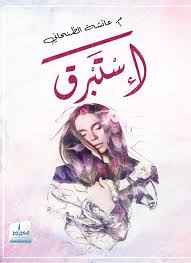
Diwan Istabraq
It is my second poetry collection, containing 27 diverse poems
Texts that mimic feelings and play on the string of emotion.
The song is rich in nostalgia and passionate in conversation. I hope it will be accepted by people of good taste.
National : Poems about love for the homeland, which the poet of the homeland, Ali Al-Khawar, dedicates in his own words to the people of the United Arab Emirates. Words that carry within them feelings of love and belonging to this generous homeland, pure love in which nothing is mixed and built on loyalty and love between the homeland and its people.
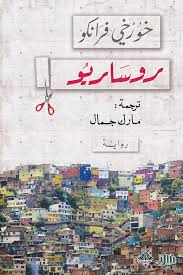
Rosario receives a bullet while she is receiving a kiss, this is how Jorge Franco begins his novel, and in those moments that Rosario spends suspended between love and death, the narrator tells us the story of a strange and mysterious love that he lived on one side with her, recalling with remarkable movements the past of “Rosario,” or rather what he was able to know from her past. She was the one who grew up in the city of Medellin, where there were weapons, crime, and poverty, and she used scissors as a tool to carry out all her crimes until they became close to her name.
In quick and intense flashes, the writer draws the features of an unpredictable, mysterious character who kills his victims in cold blood while imprinting the kiss of death on their lips. When he does this, he does not reveal everything, but rather provokes the reader’s imagination, inviting him to participate in completing the picture.
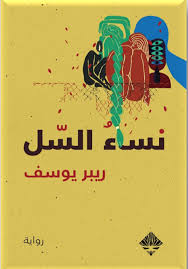
Stories that begin, develop, become complicated, and are interrupted before they resume again. Their heroines: Siranah, Selti, Salma, Khansi, Aishana, women whose paths and destinies intersected in that charming region of northeastern Syria, with which the “Berlin-Baghdad Railway” tampered with and the destinies of its residents. .
From the plains of Mardin, the cities of Amuda and Ras al-Ain, and the villages of Shorik, Kondak, and Tal Halaf, these women whisper secrets in their low, intermittent voices filled with fear and illness. But their stories and songs go beyond their bodies’ struggle with tuberculosis, to immortalize the struggles of the Yazidis, Syriacs, and Armenians with oppression, massacres, and eternal alienation.
In Women of Tuberculosis, Reber Youssef, with his poetic language and his special sensitivity, explores the northeastern region of Syria, including its diversity: ethnic, religious, and racial, relying on in-depth historical, geographical, and anthropological research into what people live in that part of the earth, but he... Through his work, he creates a curiosity to explore history once again, after the northeast of the country now has the face of a woman.








-1717716251.jpeg)