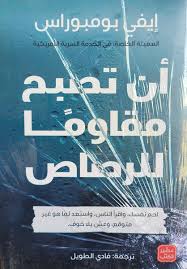
Fifteen years after his military coup and his control of power, General Bionche decides to respond to popular and international pressure and hold a presidential referendum that determines his fate. The Minister of the Interior summons advertising expert and former detainee Adrian Bettini. To convince him to lead the campaign to make Pyoncé a success, the leader of the opposition coalition consisting of sixteen discordant parties proposes to Bettini a crazy idea: running the election campaign for the “No” campaign, which is embodied only in a short television advertisement.
Instead of the usual focus on the massacres, detainees, and the horrors of the past period, Bettini suggests that the title of the campaign be: Joy is Coming. Will a fifteen-minute announcement succeed in overthrowing a dictatorial rule that lasted fifteen years?
In an optimistic, poetic style, Scarmetta tells a true struggle story of hope and joy, in the darkest of times, in a country longing for freedom.
Crime for love:
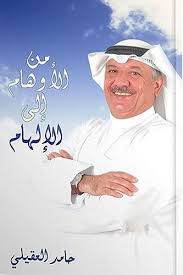
I wrote in this book a lot of different feelings and topics. Between its lines there are feelings that go back to my heart, my feelings, and my general life. I wrote about love in the sense of my private heart, and about happiness, sadness, separation, and many feelings that carry praise for one person and reproach for others. My words here do not constitute one year or a period. Short of my life, but here is a group of years that began when my pen began to draw its first letters and continues to this day.
I have talked about many things in the pages of my book, and yet my heart still longs to live more and sees that what I have written so far is nothing more than the letters of a few years that passed during my youth and youth.
I talked a lot in my book about feelings of love, and I am fully aware that many will not understand them well. They will like the beauty of the letters and the harmony of the words, but only those who have lived the same feeling and know that love is not the love that exists between two genders or two people, but rather love is to love ourselves, so we love those who love us. We love life around us and thus we see people in a completely different light.
Life in 20 Pages by Amb. Dr. Abdulsalam AlMadani is a book that simplifies life, helps you understand people, and encourages you to have a positive attitude and high spirit despite all your hardships. The book highlights events and incidents in your daily life and teaches you how to deal with them with ease. It helps you solve your problems, achieve your aspirations, and articulate your dreams, no matter how impossible they seem.
Lifelong experiences are put in quotes to make it easy for people to understand life. The more you dig in, the more you realize that your biggest problems could have been solved if you changed your approach.
Life in 20 Pages will take you on a journey where you will feel lighter, happier, and more determined.
About the book
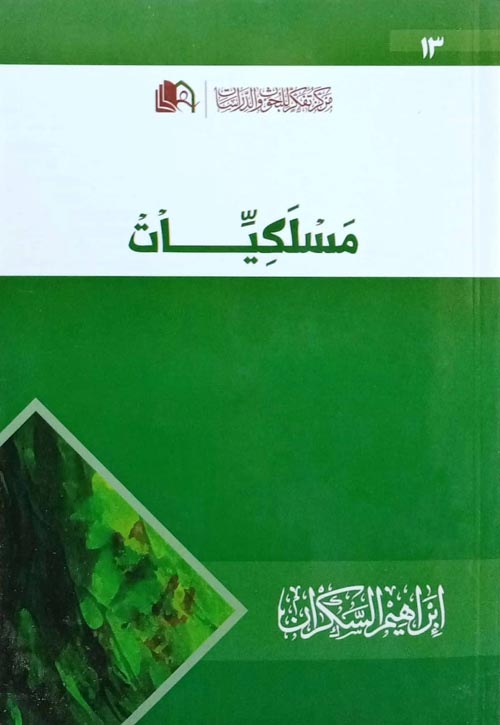
The book is divided into six chapters. The first chapter talks about the religious reform movement in Europe and the emergence of the United States of America and its role in serving Zionism in Palestine and transferring its project from the settlement stage to the state stage. It examines the roots of the relationship between America and Israel and the religious dimension, which is the basis of the strength and durability of American relations. Israeli
In the second chapter, the book talks about the October War - the year 1973 AD - which ended with the victory of the Arabs (and the destruction of the myth of the invincible Israeli army) constituted a turning point that transferred the Arab-Israeli conflict into a third world war, and made the Arab-Israeli conflict turn into a conflict of existence that is not For Israel and even the existence of the entire Arab nation, it also opened the door to reviving old ideas calling for the division and fragmentation of the Arab region, and opened the appetite of writers and thinkers to compete to present visions on this matter, such as Bernard Lewis.
The third chapter examines changing the position of the Arab/Israeli conflict from a priority to a secondary conflict, by working on the multiplicity of conflicts in the region and playing the sectarian card, which led to the disappearance of the Arab/Israeli conflict, which was on the hierarchy of priorities, among the winds of new conflicts in the region.
The fourth chapter of the book is the real beginning of transferring the ideas and plans aimed at fragmenting the region, which were formulated and officially approved after the October War, to the stage of implementation on the ground. The beginning - in the year 2003 AD - was with the aggression against Iraq, which came at times under the pretext of weapons of mass destruction, a lie formulated by the United States. Sometimes under the pretext of spreading democracy
The fifth chapter of the book talks about the soft power that the United States sought to employ to complete the plan to fragment the Arab region, which was known as the Arab Spring revolutions, which are a reproduction of the model of the colored revolutions in Central Asia. This chapter examines the relationship between the United States and the Muslim Brotherhood, and it was limited to Egypt and Syria. Because of the strategic position that these two countries enjoy in the Arab system,
Chapter Six of the book touched on ISIS and the roots of the relationship between the United States and extremist fundamentalism, the impact of the Arab Spring phase on the recovery of this organization, which is an extension of Al-Qaeda, and how the United States found in ISIS what it needed to complete the plan of creative chaos after the fall of the political Islam groups that came to power during the Arab Spring phase.