Sofia is a bold and hot-tempered child, unlike her grandmother, who takes care of her after her mother's death.
Every summer, you go on a new adventure together of a different kind: exploring parts of the island you live on, meeting new types of birds, swimming in the dangerous bay without Sofia’s father knowing, sleeping in a tent, building a miniature model of Venice, and writing a book about insects. .
Without addressing their true feelings, they spend their days in endless conversations and discussions about everything: the meaning of life and death, the nature of God and Satan, heaven and hell, and the concepts of love, family, friendship, and tolerance.
By creating an integrated world on a small, isolated island, Tova Jansson writes - in a magical style, and simple sentences loaded with profound concepts - a sweet novel about the friendship between a child who begins her journey in life, and her grandmother, who is approaching the end of this journey.
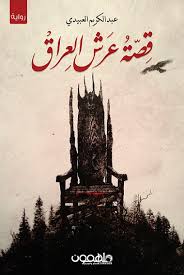
Black peacock:
A novel centered around the methods used by political organizations, particularly ideology, to create their individuals who are assigned special roles and at planned times. The social and psychological conditions that the main character in the story goes through are exploited and employed skillfully by the organization to perform their roles efficiently in the future.
The black peacock is a very complex human condition. It appears within the text with different masks and at multiple stages of time. According to this condition, its owner is forced to wear masks that suit every stage of his life and are consistent with the role assigned to him within a long path that was mapped out in advance while he was still young. The novel presents its mysterious main character in two parallel narrative lines, once in the mirrors of others and again in an internal monologue of the same character as she struggles with death on the surface of the river.
The story begins with the story of the mysterious advisor Taj al-Din, one of the leaders of the Islamic movement and one of the mysterious influencers in government, and his strange, transforming personality, with many confusing masks, to delve into the details of a long period of modern Sudan’s life extending from the seventies of the last century, from the years of Nimeiry’s rule and extending To the beginning of the new century, filled with many events that changed the course of political events in the country.
The name of the novel is taken from an adjective given to its secret hero, Adam, when he was thirteen years old when he was serving his sentence in a juvenile facility for killing his mother, her husband, and their son. At this stage, the organization pays attention to Adam's personality and his tendency to violence, and is preparing for the years in which Islamists will rule the country. The novel presents the main character from two angles: as a perpetrator who trapped many victims, and as a victim who was deceived and fell into the trap of violence.
Adam is transformed by the game of masks into Ammar Al-Barakas, Shaker, Taj Al-Din, and many other names. Thanks to it, and thanks to his deep culture and exceptional abilities, he became one of the arms of violence that the authorities exploited to discipline their opponents during the third democracy period, which lasted between the years 1986-1989, and then used it in its multiple wars in South Sudan. And Darfur, which the alleged advisor himself admitted in his narration of his memories in a personal monologue during his struggle with death.
The novel begins with the scene of the enigmatic and enigmatic man (Taj al-Din) moving to the Burri neighborhood, located east of the capital, Khartoum, close to the shore of the Blue Nile, where he kept his distance from his neighbors until the moment his death was announced in the plane accident, without any reference to his name among the missing. The question mark over the man's fate haunted the imagination of his chance neighbor and former companion during his university days, Judge Al-Naim Darraj. He is provoked by the story of the man who wore different masks, so he travels the country in search of the turning point in the path of the mysterious man before he solves all the mysteries in the end.
كيف تتحدث فيصغي الصغار إليك وتصغي إليهم عندما يتحدثون؟ بقلم اديل فابر ... مؤلفتا هذا الكتاب هما: إديل فابر، وإلين مازليش، الخبيرتان الدوليتان الحائزتان على جوائز عديدة في التواصل بين الكبار والصغار، وهما مؤلفتا العديد من الكتب التي انضمت إلى قائمة الأكثر بيعًا، والتي تعالج العلاقة بين الوالدين وبين الصغار أطفالاً كانوا أم مراهقين، وهما تعودان الآن بهذا الكتاب الواقعي المشوق الذي يعالج العلاقة بين المراهقين والوالدين، ويلقي الضوء على ما يواجهونه من مسائل حساسة في يومنا هذا. حيث يطلعنا الكتاب، بكل ما يميز أسلوب المؤلفتين من سلاسة، على ما يدور في إحدى ورش عملهما المميزة، وما يواجه الأسرة اليوم ومن ينتمون إليها من مراهقين وآباء وأمهات، في محاولة لوضع الأساس لعلاقة صحية، تقوم على المودة والفهم المتبادل، عوضًا عن المعاقبة والرد بالمثل.
Much has been written about the heroism and exploits of war, and about the extent to which it is needed as a means of achieving goals that may be considered noble. But the constant question remains: Is there a justification for peace, our happiness, and even eternal harmony, if one small tear of an innocent child is shed for it?
In World War II, more than one hundred million people were killed, wounded, and displaced in the bloodiest war - so far - in our human history. Much has been written about the tragedies and consequences of this dark phase of our history. But how did the last living witnesses see her? Children of this war?
More than thirty years after the end of that war, Svetlana, in her book The Last Witnesses, brings the remaining heroes of that stage back to their childhood that lived through the war, to tell in their words the last words... about a time that would end with them...