About the book
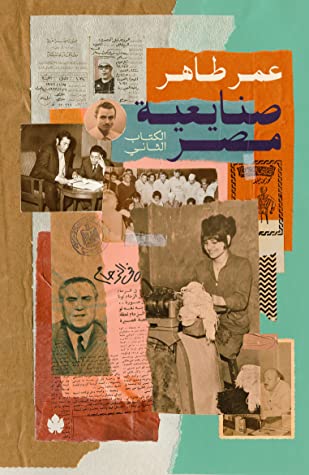
The book talks, at the beginning, about the roots of the establishment of the Emirate of Qatar since it was subordinate to the Bani Khalid who ruled Al-Ahsa, and after him, Sheikh Muhammad Al Khalifa’s settlement in Al-Zubara and its fortification, before the conquest of Bahrain, and Qatar’s continued subordination to Bahrain, and the process of the British separation of Qatar from Bahraini rule, and so on. This was followed by the stages of dependency that Qatar entered into, from dependency to Saudi Arabia and entering under Ottoman and then British rule, and it talks about the Al Thani family, the roots of their presence in Qatar, and the role of the Al Thani in collecting zakat and delivering it to the ruler of Bahrain,,
The book talks about Qatari independence from Britain, the coup process that became an alternative to the process of peaceful transfer of power, the political mentality of Qatar’s rulers affected by historical accumulations and the complex of geographical space, and the personality of Hamad bin Khalifa, who is governed by the psychological complex of his emirate’s position on the regional and international political map. And about his efforts to search for regional leadership, the goal of establishing Al Jazeera and establishing the American base, and the failure of Hamad bin Khalifa’s efforts to expand the geographical map of his emirate,,
The book also talks about the relationship between the Qatari regime and the Qatari people, and the regime’s efforts to change the demographic composition in Qatar, and the policy of replacing one people with another, and turning the Qatari people into a minority. The book moves on to the relationship of the Qatari regime with its Gulf and Arab surroundings, and then Doha’s regional and international relations, and the attempts Hamad bin Khalifa in limiting the Saudi and Egyptian role and trying to build a regional role for Doha, relying on financial diplomacy,,
The book also talks about the beginning of the roots of the relationship between Qatar and terrorist organizations (Al-Qaeda and after it the Brotherhood), and about the role of Qatar, Al Jazeera, and the Brotherhood centers in the project of creative chaos and regime change, and about the role of Doha in creating terrorist organizations in Syria and Libya, and supporting terrorism in Egypt, and about the plans. The Qatari conspiracy against Saudi Arabia, Egypt, and Bahrain, and in conclusion, the book talks about the crises of 2014 and 2017, and about Doha’s scenarios in light of the quadrilateral boycott it is experiencing, and the dangers of bringing in Iranian and Turkish forces, against the Emirate of Qatar and the Qatari regime,,
Black peacock:
A novel centered around the methods used by political organizations, particularly ideology, to create their individuals who are assigned special roles and at planned times. The social and psychological conditions that the main character in the story goes through are exploited and employed skillfully by the organization to perform their roles efficiently in the future.
The black peacock is a very complex human condition. It appears within the text with different masks and at multiple stages of time. According to this condition, its owner is forced to wear masks that suit every stage of his life and are consistent with the role assigned to him within a long path that was mapped out in advance while he was still young. The novel presents its mysterious main character in two parallel narrative lines, once in the mirrors of others and again in an internal monologue of the same character as she struggles with death on the surface of the river.
The story begins with the story of the mysterious advisor Taj al-Din, one of the leaders of the Islamic movement and one of the mysterious influencers in government, and his strange, transforming personality, with many confusing masks, to delve into the details of a long period of modern Sudan’s life extending from the seventies of the last century, from the years of Nimeiry’s rule and extending To the beginning of the new century, filled with many events that changed the course of political events in the country.
The name of the novel is taken from an adjective given to its secret hero, Adam, when he was thirteen years old when he was serving his sentence in a juvenile facility for killing his mother, her husband, and their son. At this stage, the organization pays attention to Adam's personality and his tendency to violence, and is preparing for the years in which Islamists will rule the country. The novel presents the main character from two angles: as a perpetrator who trapped many victims, and as a victim who was deceived and fell into the trap of violence.
Adam is transformed by the game of masks into Ammar Al-Barakas, Shaker, Taj Al-Din, and many other names. Thanks to it, and thanks to his deep culture and exceptional abilities, he became one of the arms of violence that the authorities exploited to discipline their opponents during the third democracy period, which lasted between the years 1986-1989, and then used it in its multiple wars in South Sudan. And Darfur, which the alleged advisor himself admitted in his narration of his memories in a personal monologue during his struggle with death.
The novel begins with the scene of the enigmatic and enigmatic man (Taj al-Din) moving to the Burri neighborhood, located east of the capital, Khartoum, close to the shore of the Blue Nile, where he kept his distance from his neighbors until the moment his death was announced in the plane accident, without any reference to his name among the missing. The question mark over the man's fate haunted the imagination of his chance neighbor and former companion during his university days, Judge Al-Naim Darraj. He is provoked by the story of the man who wore different masks, so he travels the country in search of the turning point in the path of the mysterious man before he solves all the mysteries in the end.
People wanted to escape the void
They built big cities
They became gears, hammers, bags and hats.
...
City people wanted to return to nature
When their bones were broken
They filled their balconies with flowers and trellises
They raised cats and dogs in homes.
...
They made the cities fortified and walled
It is surrounded by soldiers and guarded by aircraft.
...
When wars break out
Balcony roses will still survive
Battles rage in the mountains of the villages.
...
Peasants, harvesters and truck drivers will die
But the crops
It will still flow onto store shelves.
هذا الكتاب المدروس بعناية والمصاغ بشكل جيد يدحض معظم ضجيج الإدارة الحالي؛ من جماعة الرؤساء التنفيذيين الخارقين إلى جماعة المعلومات حتى هوس الاستحواذ والدمج.
Leaving the herd:
A book about awareness and improving the quality of life, through returning to oneself, and respecting the human right to determine his true choices and preferences, and what he likes and dislikes... without coercion, and without having to go along with others in their convictions... The book consists of a set of brief lessons in thought, morals, emotion, and relationships. It is written in a smooth language, suitable for all ages. The book is considered an extension of a group of books that the writer has previously published in recent years, including Al-Comedino, Al-Dongguan, The Camel Café, and Al-Marakibi.