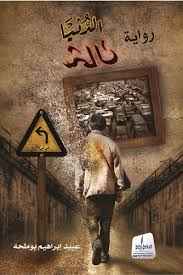
The world is north: A satirical social novel by Emirati novelist Obaid Ibrahim Bu Melha, in which he talks about marginalized figures in society and sheds light on them, their lives, and the problems they face from love, unemployment, marginalization, and the changing values and beliefs that a person adopts so that he can face life’s problems.
National : Poems about love for the homeland, which the poet of the homeland, Ali Al-Khawar, dedicates in his own words to the people of the United Arab Emirates. Words that carry within them feelings of love and belonging to this generous homeland, pure love in which nothing is mixed and built on loyalty and love between the homeland and its people.
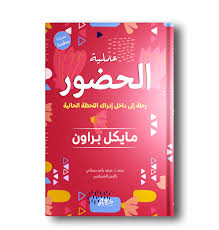
تدعونا عملية الحضور إلى أن نطمح إلى "استجابة عاطفية واعية" باعتبارها أسلوب حياة. إنّ قراءة وتطبيق الإجراءات البسيطة الموجودة في هذا الكتاب تجعل من المُمكن لأيّ شخص .
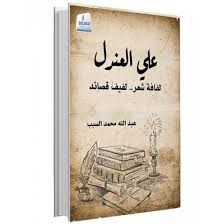
Ali Al-Andal.. a collection of poetry - a collection of poems
40 AED
40 AED
0 Reviews0 sold
Product Details :
Ali Al-Andal (A scroll of poetry... a scroll of poems) A book that sheds light on the poetic biography and creative path of the late Emirati poet, Ali Al-Andal, one of the innovators of the United Arab Emirates who departed early from the general Emirati and Arab cultural scene.. at the age of 38 years: (7/1/1966 AD - 6/5/) 2004 AD)... leaving behind a poetic and literary legacy scattered here and there... in the possession of his family, and in the private possession of friends of his creative journey that began in the eighties of the twentieth century, and in the stomachs of local newspapers and cultural magazines... and his specialized university studies in philosophy had a clear impact on his creative literary product, the matter Which made him a distinct and different personality from his university colleagues and modern Emirati poets and writers. This book (Ali Al-Andal: A Scroll of Poetry, a Scroll of Poems) is only a small station in his short life, rich in the creative products that his intellectual imagination planned. Awesome. Abdullah Muhammad is the reason
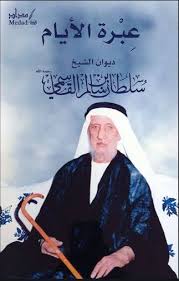
The poetry of Sheikh Sultan bin Salem Al Qasimi was a directed speech, a documented history, a drawing with words, pure emotion, and mature thought. His poetry was visions of light and a lamp in a niche. It deserves to be read, studied, and followed, especially since it depicts an era in which reading and writing became scarce.
In her book, Zinc Boys, Svetlana Alexievich documented the Soviet intervention in Afghanistan between 1979 and 1985. In it, she collected interviews with soldiers returning from the war, or with mothers and wives of soldiers who were killed there, and whose bodies were returned in coffins made of zinc.
The result of the war was thousands of dead, disabled and missing people, which prompted Svetlana to raise sensitive questions about the war: Who are we? Why did we do that? Why did this happen to us? Why did we believe all that?
Svetlana was put on trial for publishing this book, and part of the documents related to the trial were added in Arabic translation.
The missing painting:
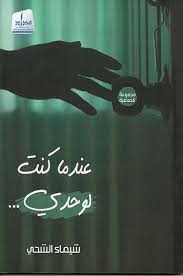
Noise that no one can hear except me, lights, people, and places that no one else knows, and others do not even believe. When I Was Alone is a collection of stories whose events will amaze you, and whose details will terrify you. It happened to some and it may happen to others, with a slight difference in the events.
Advice: If you read the book and feel afraid, do not sit alone, and if you think that you will not feel fear, do not sit alone either!







-1717716251.jpeg)
-1718344027.jpeg)
/ الزنك (جائزة نوبل للأداب 2015)-1717685539.jpg)