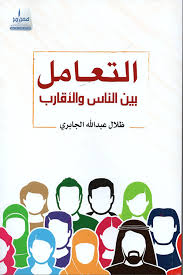
Interaction between people and relatives:
The book contains examples of demonstrating the appropriate method from the Prophet’s biography to deal with many situations that are frequently complained of as a source of disagreement, division, and distance between individuals in the family and society. I hope that the honorable reader will find in it the most appropriate way to reach comfort and tranquility with a reasonable amount of friendliness and respect in his relationships with others. And among individuals in general in the family and society, with my heartfelt wishes for an enjoyable and useful reading of the book.
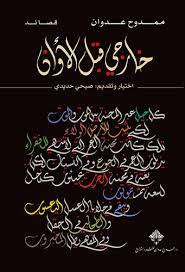
What I chose was based on a combination of personal taste and conviction - which sought to be objective as much as possible - that these examples are worthy of introducing the wide reader to Adwan’s poetic personality. What also requires clarification is that the selection of poems over others was subject to a specific technical factor: that is, the replacement of long poems in favor of medium or short ones, in order to make room for the largest possible number of texts expressing the experience, and in a way that is proportionate to the proposed size of the selections.
Hopefully, these selections will succeed in recalling a lofty poetic stature, represented by “the free son of life,” “the one who exalts himself upon condescension,” bending “with the discipline of a soldier before a spike,” looking “sad and angry, at the perforated shoes of the poor,” biased “to her path filled with the dust of honor.” "; As Mahmoud Darwish expressed in his eulogy for Adwan.
Missed : Words... of poems that tell about an imaginary reality... or perhaps they simulate realistic imagination My assumption is that someone... on this vast planet... has lived it In this life...or in other lives But they forgot to write it down... but it came to my mind... so I wrote it down Until I put my first fingerprints on characters that have existed since time immemorial Their repeated presence in this life is not a coincidence Rather, so that we can separate good from evil...or see faces completely stripped of their masks Even if we forcefully convince ourselves that it can bring us good However, evil is inherent in her from birth.
About the book:
The book The Leader Who Inspired Me explains the concept of the leader in the twenty-first century and the importance of exercising leadership at various levels, regardless of the position the individual holds. It contains 10 different chapters, and each chapter deals with a specific topic from which the reader will be inspired by a new idea and support his desire for leadership at any level. In this book, we focus on leadership in the field of education, while trying to spread the idea to all functional, practical, and voluntary levels through the examples presented and positive ideas that will enhance the individual’s role in society.
In the first chapter, the author presents her personal idea about leadership and the importance of inspiration, which plays a major role in dealing with the people around us. In the following chapters, it discusses a specific leadership style, citing an example of a specific personality, explaining how he applies this style. In the final chapters, the book concludes by talking about the importance of motivation and teamwork.
From the book's conclusion:
Look for a leader who you can represent from your workplace, and do not wait to become in a specific job in order to practice this role, because you will be very late, and you will be ahead of the curve, and no one will wait for you in a time of changes, and make the difference that you want to make, because you can simply as long as you see in it. Yourself as a leader.
When you seek to achieve the best for others, this means that you are achieving yourself, and when you seek to achieve yourself with an interest in achieving your narcissism, this means marginalizing others, and this is what offends the leader the most.
Leadership means that a mother or father leads the family to safety, and the most important outcomes of that leadership are children of character, excellence, and goodness. Leadership means that a teacher searches for the best that can be provided to his students, and the most important outcomes of that leadership are students with a high level and distinguished behavior, and leadership It means that an official is looking to employ the capabilities of his employees to achieve the best for themselves and for the work.
And in the last line... Be an inspiring leader for others and that is enough!








-1717716518.jpeg)