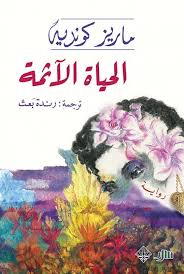
Trying to finally reconcile with a past that has been haunting her throughout her life, Coco tells the story of her family across several generations, starting with the ancestor, Albert Louis, an ambitious man who left his land trying to recreate himself as a man with wealth, passing through his children and grandchildren, and ending with her herself: Coco,” the narrator feels she must tell this tale, and it will be the monument she builds to the dead. It is the debt that must be repaid. A story devoid of great executioners and venerable martyrs, but it will nonetheless have the weight of flesh and blood, because it is the story of its people, of their dreams and hopes, of their delusions, of their failures, and of their complex legacy from which the entire race suffers.
“The Sinful Life” is a novel overflowing with interwoven stories and full of details that provide important testimony about the lives of middle-class families in the Caribbean. It was written by Maryse Conde, the Guadeloupe novelist who won the Alternative Nobel Prize in 2018, with infinite sweetness and warmth, based largely on the history of... Her own family. She wrote it as a monument to build for the dead, thus paying off her debt as well.
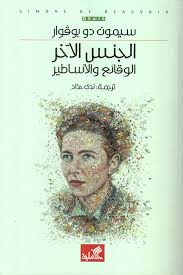
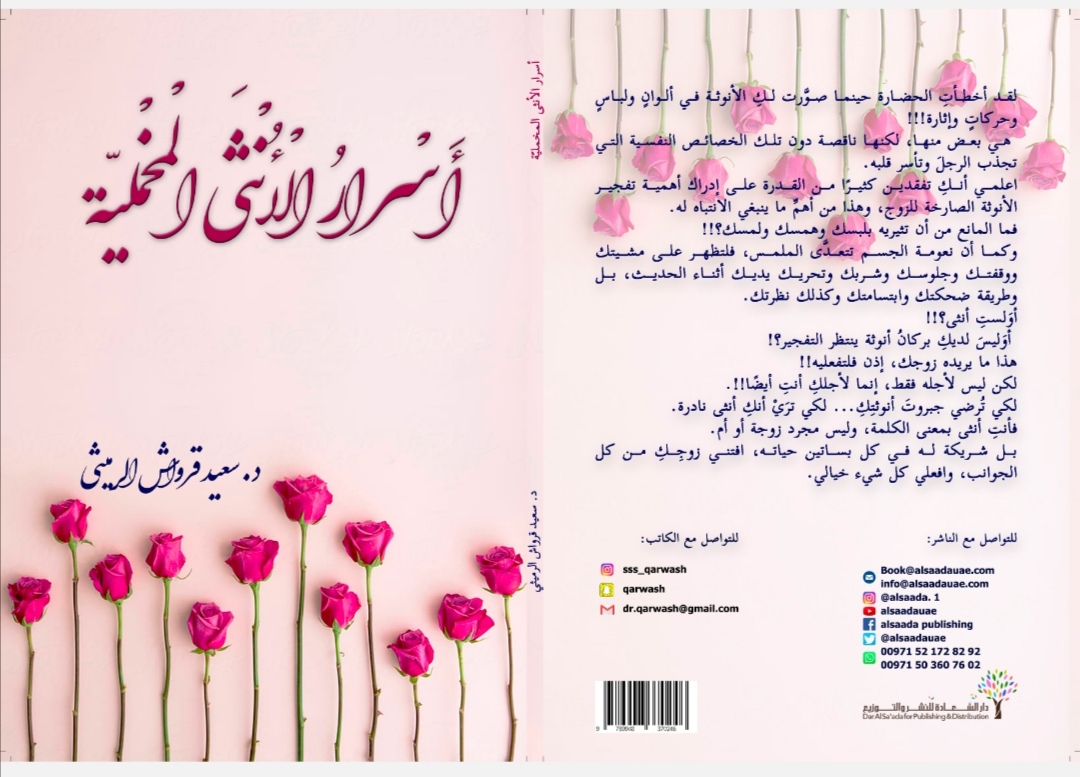
How could she find boldness, ardor, detachment, and greatness in her? These qualities only appear when a freedom throws itself into an open future, emerging beyond every given thing. We lock a woman in a kitchen or a bedroom, and we are surprised that her horizon is limited. We cut its wings, and we are sorry that it does not know how to fly. Let us open up the future to her, and she will no longer have to stay in the present.
We show the same contradiction when we imprison her within the confines of her ego, or her home, and blame her for her narcissism, her selfishness, and what accompanies them: such as vanity, crankiness, evil...etc. We strip her of all possibility of tangible communication with others, so that in her experience she does not feel the call of solidarity, nor its benefits, since she is completely devoted to her family, and isolated; Thus, we cannot expect it to transcend itself towards the common good. She stubbornly stays in the only field she is familiar with; Where you can exert influence over things, and within it you find fleeting sovereignty.
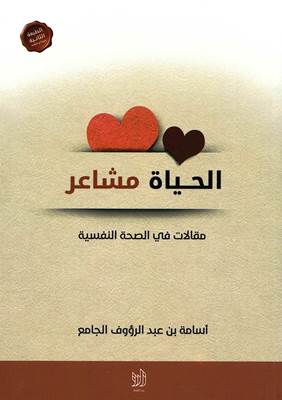
The life of an expatriate is a journey of pain and happiness, loss and discovery, success and disappointment. It is a painting in which contrasting colors, very dark and very bright, clash. The life of an expatriate is a journey whose end, according to plan, is a return to the mother’s embrace, the mother who carried him and watched over him as a child, and the homeland mother that contains all his previous memories, but it often ends with the end of the expatriate before the end of the journey or with the end of the mother. This book presents stories of the life of an expatriate that are almost identical to reality, and carry within them all those emotions that we mentioned at the beginning, and it has a tendency toward presenting the condition of the expatriate without adding the usual touch of romanticism, as it is, and without exaggeration or frills.
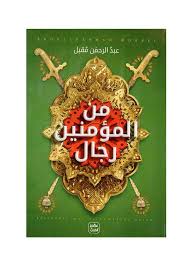
إنَّ خيرَ أهلِ الأرض بعد الأنبياءِ هم صحابة نبيِّنا -عليه الصلاة والسلام-، في حياتهم من العجائبِ ما لا يُصدَّقُ، وفي سيرتهم ما لا يُتوقع، في أخبارهم الكثير مما لا نعرف، ...