Bloody leaves:
A detective story interspersed with a historical dramatic line. The events of the story revolve around the murder of two women in their palace located on the Nile, but there is no motive or evidence leading to the perpetrator. He then discovers threads linking it to another crime that occurred earlier in the same circumstances. Both crimes are registered against an unknown person... The secret of Tut’s tomb. Ankh Amun, discovered papers lead to a dangerous secret that will reveal all the papers. It is an encrypted message that leads to the place where the papers are hidden, which are sought after by major organizations that do not hesitate to shed blood in order to obtain them.
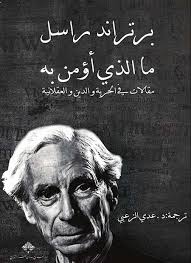
Its intellectual value. Russell was committed throughout his life to working to change the world in which he lived, and to addressing the public in a clear, rational manner. This is one of the intellectual virtues of philosophy: explaining, clarifying, simplifying, and opening the way for everyone to participate in the process of changing the world. The articles revolve around three axes: First, freedom: Throughout his life, Russell defended freedom of expression in the face of extreme religious and nationalist beliefs. His battle was to defend freedom of expression regardless of the oppressive force. This basic principle was one of the focuses of his thinking about politics and ethics. Secondly, religion: Russell criticized the Bolsheviks’ suppression of believers, and he also criticized the religious people’s suppression of atheists. His position on religion stems from a principled commitment to freedom of expression and faith. Third, rationalism and philosophy: Russell defended rationalism throughout his life, and refused to believe in any issue or opinion that was not supported by evidence in a clear, rational manner. On the other hand, mainly following Hume, Russell holds that reason has limits, and that the rationalist position also requires that we accept that our understanding of the world is limited by the limits of reason