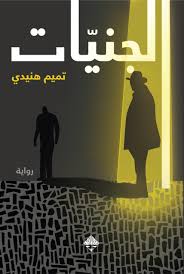
Khaled is a young man in his thirties who graduated from the College of Fine Arts. He failed to travel from his city of “fairies,” which was closing in on him from all sides, so he had no choice but to work as an employee in a bookstore, through which he practiced an additional, secret job in which he sold his works of fiction. Life would have gone better if one could keep the secret, but as Faraj, Khaled’s father, says: “No matter how much you hide it, the secret will wake up inside you one day, and then it will continue to burrow into your soul until it is released to the world.” Thus, Khaled’s choices in life soon put him in the face of “Khalil Nayef,” a lawyer with wide influence who wants to enter the world of writing.
Within a suspenseful context and a rapid pace, Tamim Heneidi dives into the scenes of the relationships between writers, publishers, and bookstore owners, and sheds light on the way in which culture may be used to polish the image of the political class created by the war. But can books perform a task like this?
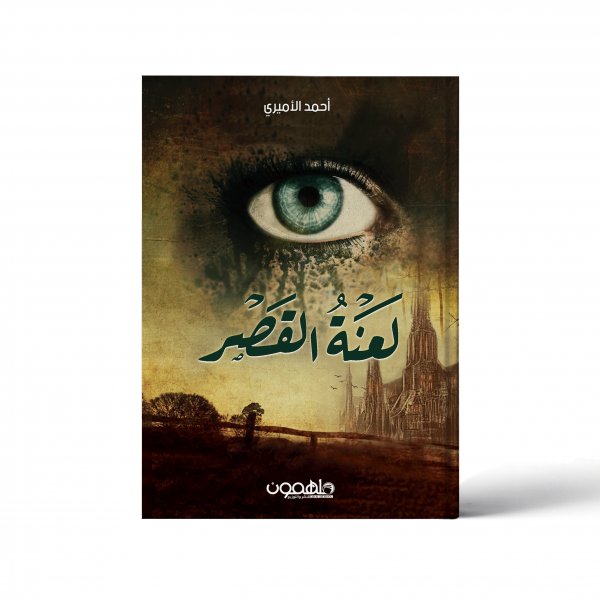
The collection of the master of absence:
It is a collection of popular poetry that contains various topics in poetic poems, including emotional, social, humanitarian, and subjective ones. It also contains different types of popular poetry, some of which are vertical, some are ta’fa’il, and some are double between ta’fa’il and vertical..
The collection talks about the theme of absence in general in poems...but this absence is similar to presence in the world of poetry...it has innovative poetic images, different from the rest of the collections...with the presence of the Omani folk color mixed with beautiful modernism...
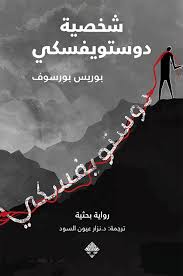
In everything Dostoyevsky wrote, he was writing about his spiritual research and exploration, and looking for solutions to the issues that worried him, but which would not be solved, as he himself clearly realized. And all of his heroes, including those who differ greatly from him in terms of his moral formation, struggle with the issues that Dostoyevsky himself wrestled with throughout his life. He is the spiritual father of all his main heroes, meaning that he represented a model for them. There is not a single person, among those whom he created and created, who did not copy him from himself, even if in a different way.
The life of a great personality becomes intelligible to us to the extent that we are able to delve into it, with one look, in the full diversity of its characteristics, which are often contradictory, but stemming from a single root. If we are not able to accomplish this, then in one way or another, in one way or another; We will simplify and impoverish this great personality.
If a biography of Dostoevsky's life was written without considering his novels, it would be worth nothing, and it would be impossible to restore the formation of his personality without his works. Dostoyevsky's realistic, experimental biography for understanding his novels is no less important than his novels themselves for understanding his personality. On the pages of Dostoevsky's novels, all of humanity's history, thought, and culture are revived, reflected in individual consciousness.
In order to understand the true importance of Dostoyevsky, which he has acquired in our time, a frank conversation is necessary.








-1725458334.jpg)