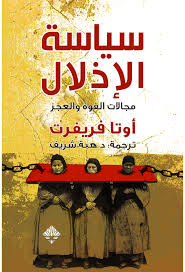
The traditional perception sees that criminals have violated the social order and public peace. Therefore, they must be punished publicly, as the presence of spectators confirms and justifies the judge’s ruling on the one hand, and achieves the authority’s goal of deterring others from repeating the crime on the other hand. This deterrence does not come only from the fear of physical harm due to punishment, but also from the fear of feeling shame and disgrace. Which can only be achieved with witnesses to the humiliation taking place.
But how are societies formed that accept such practices, or even demand them? What political systems allow humiliation, and what systems try to prevent it? Can we say that humiliation is only related to the “Dark Middle Ages” period, or has the “bright,” luminous, and enlightened modernity brought with it new methods of shame of its own and invented new practices of humiliation?
In a stunning analysis of historical and contemporary events, German historian Uta Frevert shows the role that humiliation played in building modern society, and how humiliation and the sense of shame it generates were used as a means of control, from the worlds of politics to school education, and that the art of humiliation is not only a thing of the past, but has evolved to suit... The changes of the twenty-first century, in a world where humiliation is not only from the political forces that control us, but also from our peers.
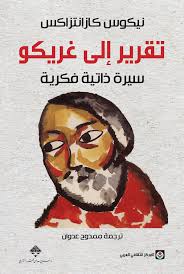
My Report to Goiko is not an autobiography. My personal life has some value, quite comparatively, for me and for no one else, and the only value I knew of in it was in the efforts to ascend from one rung to another to reach the highest point it could reach. Its strength and stubbornness, the peak that I arbitrarily named “the Cretan View”.
Therefore, you, reader, will find in these pages the red trace left by drops of my blood, the trace that indicates my journey between people, emotions, and ideas. Every human being, worthy of being called the Son of Man, must carry his cross and ascend Calvary. Many, in fact most of them, reach the first or second degree. Then they collapse panting in the middle of the journey, never reaching the peak of Golgotha, in other words, the peak of their duty. To be crucified, to be resurrected, and to have their souls saved. Their hearts weaken because of their fear of crucifixion, and they do not know that the cross is the only way to resurrection, and there is no other way.
The novel 'Fragments' is the novel of an Arab generation trying to repair the fragments of history, homeland and dreams to reconstruct the picture so that life is understandable and liveable.
It is the story of a boy, Karmuz, named Imad, who tries to understand the condition of his father, Yazid, who rebelled against life in all its details. A boy decided to put together the remains of his father's pictures and clippings that he had saved from the fire when the father suddenly decided, at the height of despair and revolution, to set fire to his memory during a hot summer.
From the pictures and clippings that saved the boy “Imad,” the events of the novel begin to approach what was, as the pictures turn into a flowing stream of words that sheds light on the past of a man “or a generation, more precisely.”











-1718247174.jpeg)