In its content, the novel deals with the story of a person who begins to wake up one day to find two men at the door telling him that he is wanted for trial, but they do not explain what case they are accusing him of. For any crime, he is interrogated, and as events develop and change, he fails to find out his crime. He and his lawyer begin to defend himself in various ways. But the difficulty they face is not knowing what his crime was
A unique friendship brought together Abed, Hamed, and Khaled, but the war tampered with this friendship and shattered it.
The narrator recalls the life history of these three, using those close to them, to fill in the gaps in the story, and to discover the secret of the mysterious prophecy made by Abed, in which he said that he would die near the honey rocks after six years and two months.
In poetic language, Mamdouh Azzam writes about death, friendship, and love, and about the bitterness of grudges that grow and grow in the mud of vile wars. And about war and the impact it leaves behind on people's souls.
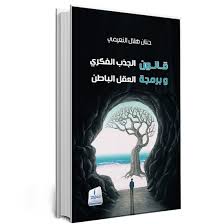
The Law of Intellectual Attraction:
The Law of Attraction is a concept in psychology and neuroscience that refers to the idea that the thoughts, criticisms, and feelings that we focus on and develop are powerfully attracted to us. The task of an individual to experience the Law of Attraction is to move toward positive thinking, use visualization, and continually focus on the goals and things that he or she desires to attract.
When we focus on positivity and have self-confidence, we attract opportunities, people and experiences that enhance our success and happiness, and our subconscious mind acts as a magnet that attracts what is in line with our thinking and feelings.
Subconscious programming is the process of changing negative models in our subconscious mind and replacing them with positive models
This is done by using techniques and methods such as guidance, positive affirmations, and positive visualization.
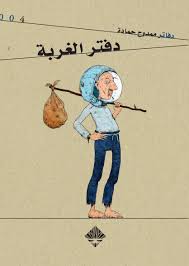
The life of an expatriate is a journey of pain and happiness, loss and discovery, success and disappointment. It is a painting in which contrasting colors, very dark and very bright, clash. The life of an expatriate is a journey whose end, according to plan, is a return to the mother’s embrace, the mother who carried him and watched over him as a child, and the homeland mother that contains all his previous memories, but it often ends with the end of the expatriate before the end of the journey or with the end of the mother. This book presents stories of the life of an expatriate that are almost identical to reality, and carry within them all those emotions that we mentioned at the beginning, and it has a tendency toward presenting the condition of the expatriate without adding the usual touch of romanticism, as it is, and without exaggeration or frills.
A collection of short stories for children from 4 to 8 years old.
In it, the writer tries to work on some of the basic concepts that she wants to convey to the Arab child in an attempt to emphasize the meanings of accepting others, tolerance, working on identity, and strengthening the child’s imagination. In the story of Tala’s Braid, the writer tries to work on the meaning of patience, optimism, and resistance to illness, for resistance is what saves us. Finally, do not give in to the disease.
In the story of the dream of the black duck, we find the duck suffering from lack of acceptance and exclusion, so it tries to search for this acceptance, and finds it from others who compensate for the loss of the homeland. In the story of him flying while stealing his shadow, you also work on the meaning of acceptance and the search for friendship, emphasizing that every story has more than one point of view to look at, and the truth has other faces. The eagle that threatens the rabbit is also forced to search for food for its young, and the caution that the rabbit adhered to Save him from the claws of the eagle, and the little bird can be wiser than the eagle, and so on.
While the story of Basma and the mermaid strengthens girls’ sexual identity and works to strengthen their self-awareness so that they do not fall into the trap.












-1724838524.jpg)