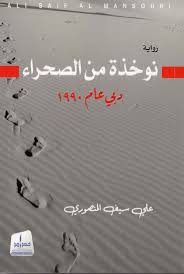
Obaid is a young orphan from Al Ain, born at the beginning of the twentieth century. He grew up in the desert and learned to make swords, but he loves the sea. He decided to travel to Dubai to become a sailor, and despite the opposition of his mother and sister, he left for Dubai, where he boarded one of the departing ships on a long journey.
The ship crashed on the shore of one of the islands, and Obaid was the only survivor. He discovered that a primitive tribe lived on this island. He tried to escape from the island, but the pirates and slave traders attacked the island and kidnapped the princess. His pride revolted and he freed the princess - and with the help of the people of the island - he defeated the pirates and slave traders. Obaid married the princess and had children with her. He longed to return to his homeland, but pirates and slave traders attacked the island a second time and killed him, his wife, and a large number of tribe members. Obaid was writing all his memoirs in manuscripts found by: Saif - a young Emirati who loves to travel and collect antiques - so Saif decided to travel to the island, where he discovered that Obaid’s granddaughter still ruled the island, and then he returned to Al Ain to visit Obaid’s nephew and tell him the story of his uncle, Al-Nukhadha. "from the desert"