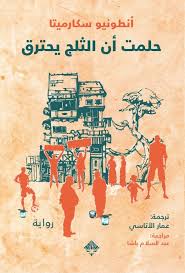
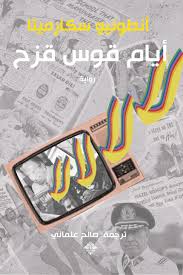
Under the roof of a modest hostel in a poor neighborhood in the Chilean capital, a strange group of guests meets, including workers, trade unionists, students, traffic police, and performance artists. Let them all witness the last days of the rule of the Popular Union headed by Salvador Allende, before the bloody coup led by General Pinochet took place and changed the history of Chile forever. Thus, this hostel turns into something similar to an operations room through which some Chilean leftists try to protect the socialist government and stand up to fascism. And among all of them, Arturo, the braggart and virginal football player, coming from the south to the capital, and burdened with dreams of fame and unsatisfied desires, tries to discover himself and determine his position on everything that is happening around him.
“I Dreamed That the Snow Was Burning” is the first novel by Chilean writer Antonio Scarmeta, and one of his most important works. In it, the features of a special, diverse style are established in terms of rhythms and narrative techniques, in which imagination blends with reality, and in which sarcastic humor alleviates the harshness of dramatic events. The book is a living document of the dialogues, conflicts, and popular mood that prevailed in Chile at the most pivotal moments in its history.
The reality of terrorism: walking precedes awareness
50 AED
50 AED
0 Reviews0 sold
Product Details :
The reality of terrorism Walking precedes awareness The book talks about the seed of terrorism and how it forms, grows, and develops into a societal phenomenon It turns life into a cloud of clouds, filling the earth with toxic acid rain. Freud says that Hostility towards others is found in individuals who live in a state of isolation and immersion in... Repression, in short, they carry the genes of the forest heritage, and they did not get rid of it for reasons Educational, linked to the relationship with relatives, the first of which is parents. Martin Heidegger says that man, It has lost its existence since mechanization took over its destiny, and it became the tool you use Mechanization. As we will read in this book, the dilemma of the mind in the context of the narration, the mind stops About moving meaninglessness into the space of meaning when what is transmitted becomes a wheel that spoils the dialectics of history The mind becomes a wild horse, saddled towards the absurd.
Fifteen years after his military coup and his control of power, General Bionche decides to respond to popular and international pressure and hold a presidential referendum that determines his fate. The Minister of the Interior summons advertising expert and former detainee Adrian Bettini. To convince him to lead the campaign to make Pyoncé a success, the leader of the opposition coalition consisting of sixteen discordant parties proposes to Bettini a crazy idea: running the election campaign for the “No” campaign, which is embodied only in a short television advertisement.
Instead of the usual focus on the massacres, detainees, and the horrors of the past period, Bettini suggests that the title of the campaign be: Joy is Coming. Will a fifteen-minute announcement succeed in overthrowing a dictatorial rule that lasted fifteen years?
In an optimistic, poetic style, Scarmetta tells a true struggle story of hope and joy, in the darkest of times, in a country longing for freedom.