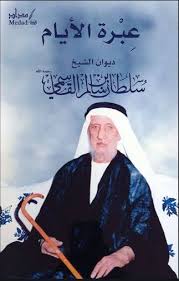
The poetry of Sheikh Sultan bin Salem Al Qasimi was a directed speech, a documented history, a drawing with words, pure emotion, and mature thought. His poetry was visions of light and a lamp in a niche. It deserves to be read, studied, and followed, especially since it depicts an era in which reading and writing became scarce.
تناقش الرواية مفهوم الروح والنفس , الإنتحار والخوف من الموت , الكوابيس وتطبيقها, الأمل واليأس , الصدفة و القدر في إطار مبني علي دراسة نفسية لحالات حقيقية
A novel between fantasy and reality with fictional characters. The novel is distinguished by its extreme depth of idea and respect for the reader’s mind. The novel revolves around Soldier No. 56. Who is taken prisoner and then transferred to a special military barracks. He is trained under the supervision of the commander who will continue with him until the end of the novel. He will have a prominent role in refining and developing the soldier’s character. After completing the military course, he will qualify to be the personal guard of a political figure. From here, events begin to escalate and the writer paves the way for the emergence of new, changing characters. The course of events reaches its climax so that the reader finds himself returning to the same place and the same characters in different roles. The novel is distinguished by the ease of its expressions and its interest in the factor of suspense and learning about the arduous lives of soldiers in a professional manner. The novel is distinguished by its richness in Arabic linguistic vocabulary, which increases the beauty of the novel. Latifa Al Jasmi
In the introduction to his first collection of short stories, the Chinese storyteller Lu Xun says that he found himself driven to write because he felt intense loneliness. He was not able to forget, or, rather, he was not able to forget completely; So, he wrote stories about the past.
This is exactly what prompted me to write: overwhelming loneliness. I also failed to forget, so I wrote what remained in my memory about Syria before the war.
Sometimes, exiles write about nostalgia for a country they miss and wish to return to. This is not like the nostalgia of Syrians: the country has completely changed, and even disappeared. We long for a place that does not exist, except in memory. And memory, as you know, writhes, colors, and churns. I am no exception, and my memory does not claim to be completely faithful to reality, but I tried hard to write exactly what you dictated to me.
Hopes, dreams, and losses are all fading quickly, and so is the country, and what remains of it is in us: as if it were a half-smile, or a summer cloud, or a bright comet passing quickly, only to disappear completely moments later, before the eyes of curious, bored viewers, indifferent to its fate...







/ ( قصة غرق دارا )-1717687708.jpg)