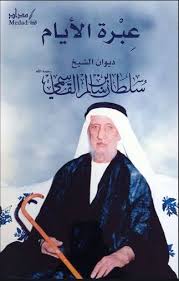
The poetry of Sheikh Sultan bin Salem Al Qasimi was a directed speech, a documented history, a drawing with words, pure emotion, and mature thought. His poetry was visions of light and a lamp in a niche. It deserves to be read, studied, and followed, especially since it depicts an era in which reading and writing became scarce.
It is said: “Writing theater is, in a way, knowing how to tell our story.” But the past ten years have undermined the axioms. Instead of asking how, we began to ask: Why do we talk, and about what? Thus, these four texts come today to answer these questions in their own way, and carry the concerns of their writers “here and now.”
A text depicting the city as he sees it: two elderly people guarding public toilets on a street in Damascus; Where stories seep out from under dirty bathroom doors, another about a young man who spends most of his time in the kitchen, unable to work and interact with others, and instead tries in vain to stop the water dripping from the tap so as not to drown him, and a third text about a faltering relationship between a Syrian young man residing inside... A Syrian woman residing in Germany. As the two try to maintain the connection that unites them in the face of the difficult circumstances of their lives, a final text sheds light on the mentality that prevails among Syrian artists in “Despora,” and affects their work mechanisms and their relationship with cultural institutions, by shedding light on the rehearsals of a theater group preparing for the play “The Return of Danton.” With projections on the Syrian situation.
Taken together, the texts of this workshop form an image that resembles its spaces with the questions of these spaces, or with the absence of questions, with the blurring or dominance of memory, with confusion, with boldness, with violence, and with death. Stage masters.
The term “women’s empowerment” has invaded the research literature and reports issued by civil society organizations in the Arab region, without sufficient introduction to this term, its dimensions, indicators, and methods for measuring it, especially in view of the geographical and cultural specificities, and the different historical circumstances of women from one country to another: the empowerment of women in... Belgium, or Ecuador is not the same as empowering them in Syria.
This is precisely what justifies the interest in publishing the “Methodological Guide to Women’s Empowerment,” prepared by the work team in the “Gender and its Indicators” project, managed by the Women and Development Committee of the General Department of Cooperative Development (DGCD) in Belgium.
Instead of adopting a fixed template that applies to all women, this guide takes into account the cultural specificities of each society and proposes a flexible methodology that allows for the formulation of empowerment indicators.
Empowerment, according to the words of the authors of this guide: “is not based on a process of horizontal development, or fixed values in society, but rather a cumulative process built on the activities of women’s movements, as well as mixed movements.”
Thus, this guide explores the relationship of the concept of empowerment to other related terms, such as: power, distribution of responsibilities, and building identity.
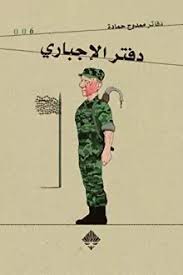
Some of them call it (the service of knowledge), and some of them call it (the compulsory service), but the truest name for it is the name given to it by the public: (compulsory). Compulsory, no matter how much they cover it with national cellophane, will remain one of the heaviest experiences that a person goes through. He will live a long time and die, and the heavy feeling that there is a gun on his shoulder will never disappear.
I do not know if what I am going to narrate has happened before, or if it is happening today, this hour, now, this moment. Or will it happen later, tomorrow or the next day, very soon or very far away? But, I know, it always happens. where? In the world, here, there and everywhere, but what matters to me is that it is happening here in this place, my country, and in the city that I could not leave, for countless reasons. The city that, I repeat, I cannot die away from, nor can I live away from it. with whom? With me, it is the first answer, because it is known about me that I only write about myself, or something that happened with another person I know well, or perhaps with a person I know briefly, or with a person I created from a mixture of people, or a person I made up completely. However, as a technical solution to this dilemma, I see that this time, it happened to you specifically, you who are now reading what I write and suspect that it is about you, then little by little you will know that it is about you. Because literally, or almost literally, it happened to you, and it applies to you only.
A special kind of anxiety grips Martin Santome after he approaches retirement age. He sees that his life has passed without him achieving anything worth mentioning. However, something changes after hiring the young woman, Abeyanda, in the office where he works, as he suddenly experiences feelings of happiness. After his life had deprived him of her for many years, since the death of his wife and his having to raise his children alone.
Through Santome's diaries over the course of an entire year, Benedetti depicts for us the life of the middle class in Uruguay, expressing with great sensitivity the loneliness and lack of communication, love, happiness, and death, in a poetic narrative that qualifies this novel to be one of the most beautiful and powerful love novels. And elegance in Latin American literature.
Sustainable development... “The United Arab Emirates as a model”
65 AED
65 AED
0 Reviews0 sold
Product Details :
Sustainable development.... In this book, we attempt to get acquainted with the theories and models of sustainable development in the West and in the Islamic world, in terms of the circumstances that led to its emergence, the basic ideas that represented the basis of its launch, the theoretical and practical approaches that followed it, and the near and distant results that resulted from its success. Or its failure. The United Arab Emirates is actively striving in the field of sustainable development and its applications, through large and promising projects, making it a role model. In addition to the role of civil society in achieving sustainability, linking monetary policy in the Islamic economy, and the role of sustainable development indicators in decision-making in institutions.







-1718248913.jpeg)
-1717716796.jpeg)