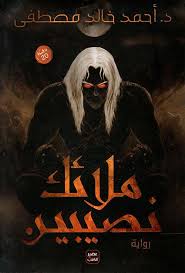
Time dragged on the Cold War until it seemed as if it would last forever, and then when the people of the earth became convinced that they were capable of it, weapons appeared to announce the birth of a new era. Dark nights multiplied, and injustice gave birth to black offspring with a long robe that extended to cover the edges of the world. As the daughters of time dissolved into each other, the breezes of light began to illuminate the margins that had been neglected by the hand of murder, so that life began to return, little by little. However, it seems that the third war was not enough for a handful of survivors to learn the lesson well. The pandemonium was restored, and the land, which had become empty except for dozens, was no longer sufficient to satisfy the ambitions of the men. The diagrams started on a white page and quickly turned black. This is a story told in the past tense that humanity will soon receive. A few survivors of the nuclear war are granted a long life, and their lives are extended to populate the Earth, but humans are humans, as the struggle over chairs soon returned exactly as it was before the countries met in a war that almost made humans news. Nour and her husband Rashid come out of hiding to find that their once prosperous city has become desolate and there is no trace of anything but death on the sidewalks. The husband searches for survivors, only to have hope shattered on a wall of corpses lying on the sides of the road in disarray. The pair's patrols continue until they realize that a new world, unknown to humanity, is taking shape. After a few days, they realized that they had no choice but to flee a life closer to the world of the jungle, so they began the journey to seek the scent of humanity outside the city limits.
We must contemplate the secret of Homeric creativity in the epic narrative. So Homer does not care about telling only what happened in his epic “The Iliad,” but he is more interested in presenting the context of what happened and depicting the world in which this event occurred. We find events covering the universe from above Mount Olympus - the snowy sky - to the depths of the raging sea and the burning forests, and even the depths of the human soul itself in all its conditions, whether good or bad.
The events also cover gods, humans, the animal kingdom and birds. So we are dealing with a depiction of a universal existential situation, not a passing individual event. We are faced with an integrated system in which all the features and various components of living things and things interact, so that in the end we obtain a poetic exploration of the universe and its working system.
A collection of short stories for children from 4 to 8 years old.
In it, the writer tries to work on some of the basic concepts that she wants to convey to the Arab child in an attempt to emphasize the meanings of accepting others, tolerance, working on identity, and strengthening the child’s imagination. In the story of Tala’s Braid, the writer tries to work on the meaning of patience, optimism, and resistance to illness, for resistance is what saves us. Finally, do not give in to the disease.
In the story of the dream of the black duck, we find the duck suffering from lack of acceptance and exclusion, so it tries to search for this acceptance, and finds it from others who compensate for the loss of the homeland. In the story of him flying while stealing his shadow, you also work on the meaning of acceptance and the search for friendship, emphasizing that every story has more than one point of view to look at, and the truth has other faces. The eagle that threatens the rabbit is also forced to search for food for its young, and the caution that the rabbit adhered to Save him from the claws of the eagle, and the little bird can be wiser than the eagle, and so on.
While the story of Basma and the mermaid strengthens girls’ sexual identity and works to strengthen their self-awareness so that they do not fall into the trap.
The story of a dream:
It consists of short and very short thoughts that tell about a reality that the writer went through and some of the situations, and it contains messages and advice from which the reader can learn in his daily practical life.
I hope that you will respond to the issue of approving the publication of the book
Many thanks and gratitude to you
Maryam Abdullah Al-Dhanhani
In 1920, the British philosopher, logician, and mathematician Bertrand Russell traveled on a short visit to Russia, a trip that brought him a lot of frustration, and later made him one of the most prominent critics of Bolshevism, or the “Russian experiment in communism,” without this meaning that he abandoned his support for socialism as an idea. Or a political approach.
In the first section of this book, Russell records his direct impressions of that visit, in the form of journalistic observations carried out by a committed leftist and first-class philosopher. While the second theoretical and philosophical section is devoted to presenting his main criticisms of Marxism and Bolshevism. Such as criticizing the Marxist philosophy of history, the psychological motives that drive man according to Marx, criticizing the Bolshevik vision of democracy, and refusing to repeat the Bolshevik experience in the West.
Russell presents his ideas to the average reader in a smooth manner without this meaning that he abandons the depth of treatment. Russell's experience and his relationship with a revolution he believed in and witnessed its failure may inspire many. Because it teaches them that changing the world for the better comes through honesty and criticism, and through learning from mistakes, and understanding those who committed them with idealism and courage.
I do not know if what I am going to narrate has happened before, or if it is happening today, this hour, now, this moment. Or will it happen later, tomorrow or the next day, very soon or very far away? But, I know, it always happens. where? In the world, here, there and everywhere, but what matters to me is that it is happening here in this place, my country, and in the city that I could not leave, for countless reasons. The city that, I repeat, I cannot die away from, nor can I live away from it. with whom? With me, it is the first answer, because it is known about me that I only write about myself, or something that happened with another person I know well, or perhaps with a person I know briefly, or with a person I created from a mixture of people, or a person I made up completely. However, as a technical solution to this dilemma, I see that this time, it happened to you specifically, you who are now reading what I write and suspect that it is about you, then little by little you will know that it is about you. Because literally, or almost literally, it happened to you, and it applies to you only.