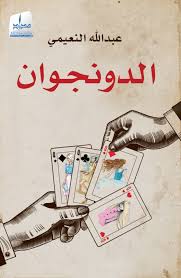
This book consists of two chapters: the first in which I try to analyze the womanizer’s personality and get closer to his mysterious and complicated inner world.
I do not need to say that these tricks are not used all at once, but rather in each case as it suits it. I am certain that many of them do not deceive women, but Dongguan does not care about how things will turn out. He throws away his lie and runs away!
Before I forget.. Don Juan is a character from Spanish folklore, who appeared for the first time in the play Magen Sevilla.. Legend says that he was a womanizer, and a famous lover, who seduced more than 1,000 women!
I was extremist...
In the words of Dr. Waseem Youssef:
- Today I will speak about myself. Yes, I was petrified and extremist. Yes, the religious trend - sometimes - pulls you in so much that you want to distance yourself from your society. Change or understanding reality is not reprehensible. Indeed, understanding religion is something to be praised for. Petrification is reprehensible. To inherit Islam without explaining this is reprehensible. God Almighty wants rational people, and He addressed His servants and demonstrated Himself with reason.. And He made the signs, including the sun and the moon, evidence of His existence.. God Almighty wants you to look at religion through the lens of reason.
O youth of the nation... I present to you the essence of my life and what happened to me... Read it impartially, and cleanse your hearts and minds from the impurities of extremism, fossilization and extremism. I advise every young man and every man who faces psychological conflicts based on extremism and extremism.
......Read and I will meet you at the end of the book..!!