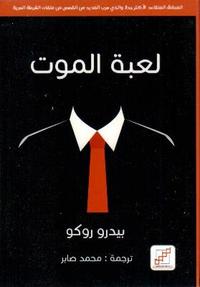
On a deep wound that requires ages to heal, the novelist, Kim Ecklin, presses to open a biography of genocide, and travels from the farthest west to the farthest east, to tell part of the tragedy of an Asian country, recording part of the testimonies of the living survivors, and those who wrote small signs, bearing two words. “We will not forget,” and they hung it on tree trunks, and it was also motivated by the story of a woman she met in the market of the Cambodian capital, Phnom Penh, who lost all of her family members at that time, and when the Canadian author asked her: “Can I help?” What can I do? Her answer was: “Nothing, I just wanted you to know.”
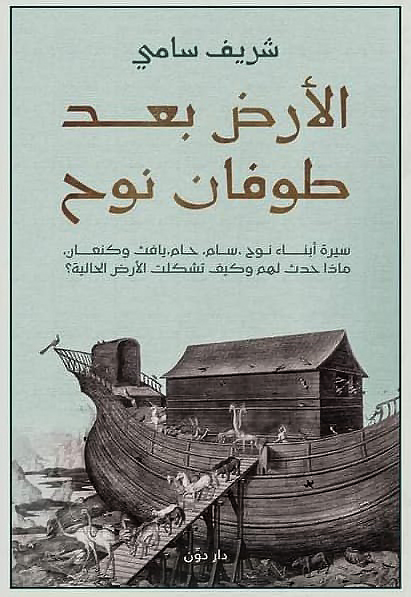
An immortal masterpiece, the largest and greatest literary work in the history of Italian literature, one of the hundred greatest books in human history, and the most printed, published and translated book after the holy heavenly books in the world... it is the “Divine Comedy.” A unique symbolic journey through otherworldly worlds undertaken by the greatest writers of the centuries Dante Alighieri, a symbol of sinful life, leads him to "Hell" and "Purgatory", then "Beatrice", a symbol of faith, leads him towards "Paradise"... It is a long and turbulent journey towards knowledge and faith, filled with symbols that have given it ambiguity, complexity, and brilliance in the eyes of readers, critics, and interpreters. Transferring all of humanity from a state of misery and misery to a state of happiness and contentment is one of the goals of our book, as stated by its author, by diving into the depths of history, recounting rich life experiences, and classifying people according to their deeds in their world, between hell, purgatory, and paradise, and through what the work contains. Philosophy, wisdom, morals and emotion. The strength of the structure, the strength of the style, and the interconnectedness of meanings are features that uniquely characterize this epic.
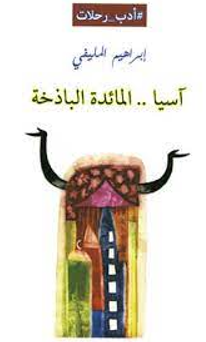
About the story: The story of a beautiful girl who came from the land of the Nile and married (Atej). She lived in Fareej Al Murar, before settling in the Al Twar area. She adapted to the spectrum of Emirati society. She gave birth to girls and boys and had grandchildren. She was proficient in cooking, cooking, and Emirati ramsa. Her story is a collection of stories, her heroes and her children. The eight.
In the introduction to his first collection of short stories, the Chinese storyteller Lu Xun says that he found himself driven to write because he felt intense loneliness. He was not able to forget, or, rather, he was not able to forget completely; So, he wrote stories about the past.
This is exactly what prompted me to write: overwhelming loneliness. I also failed to forget, so I wrote what remained in my memory about Syria before the war.
Sometimes, exiles write about nostalgia for a country they miss and wish to return to. This is not like the nostalgia of Syrians: the country has completely changed, and even disappeared. We long for a place that does not exist, except in memory. And memory, as you know, writhes, colors, and churns. I am no exception, and my memory does not claim to be completely faithful to reality, but I tried hard to write exactly what you dictated to me.
Hopes, dreams, and losses are all fading quickly, and so is the country, and what remains of it is in us: as if it were a half-smile, or a summer cloud, or a bright comet passing quickly, only to disappear completely moments later, before the eyes of curious, bored viewers, indifferent to its fate...