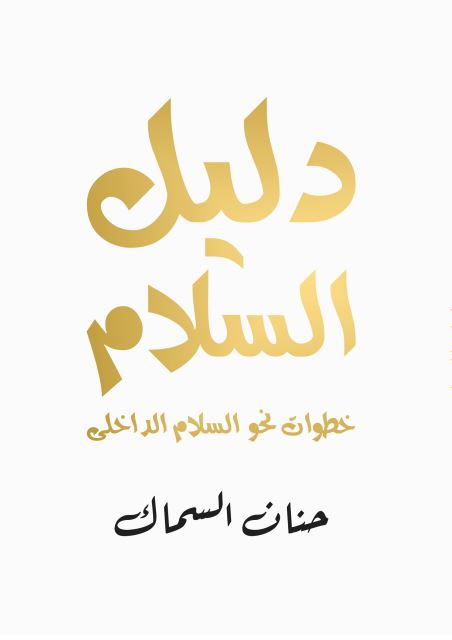
«دليل السلام» لحنان السماك هو بلسم القلوب المركّز في ثمانين حكمة ناصعة، تُرشد من ينشد السكينة إلى جادة الصفاء. لا هو كتابٌ تقني، بل مرجعٌ ظلّي للقلب. يمنحك دفعة نحو تقبّل الذات، فتح أبواب الرحمة الداخلية، ومهارة السمو فوق الزوابع اليومية
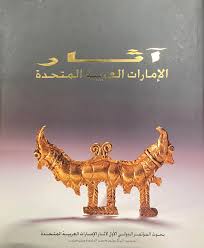
From the ancient maritime heritage of the Emirates / colorful
70 AED
70 AED
0 Reviews1 sold
Product Details :
The UAE’s ancient maritime heritage: This book talks about the impact of the screen boat and the methods of preparing and equipping fishing equipment in the past in the Emirates
The missing painting:
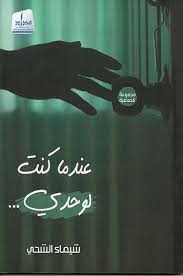
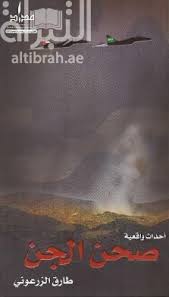
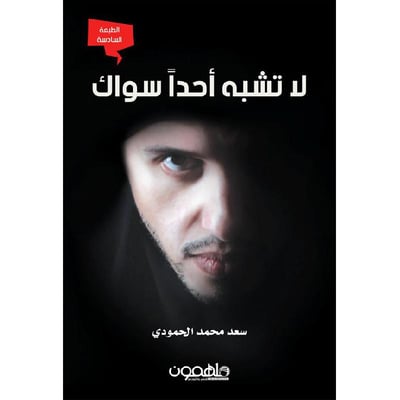
Noise that no one can hear except me, lights, people, and places that no one else knows, and others do not even believe. When I Was Alone is a collection of stories whose events will amaze you, and whose details will terrify you. It happened to some and it may happen to others, with a slight difference in the events.
Advice: If you read the book and feel afraid, do not sit alone, and if you think that you will not feel fear, do not sit alone either!
And love, since it was what Yemen suffered from, has not been found in the history of contemporary poetry More beautiful than these verses to begin my book Sahn al-Jin, a portion of the poem of the beautiful poet Ahmed al-Saqqaf, who passed away at the age of almost a century in his masterpiece Coasts of Glory, Coasts of Glory. This is a poem that highlights the importance of the Arabian Gulf and the Arabian Peninsula and the role of its people in defending and protecting themselves from The nation’s gains. Yemen is the flank of the Arabs, and the national strategic depth of the Arab Gulf states and the Arabian Peninsula from our Levant to our Yemen. Yemen is the common denominator for all the Arab Gulf states from a demographic standpoint. The tribes of Yemen are the tributary of all the tribes of the Arab Gulf states, as well as the countries of the Levant, so no city is devoid of In the Kingdom of Saudi Arabia, Kuwait, Qatar, Bahrain, Oman and the Emirates, there are tribes that return to their original Arab origin in Yemen. It is indeed the birthplace of the Arabs, and from it the Arab civilizations rose from before the ages until our modern era. Therefore, the importance of Yemen is not only in the strategy of the location overlooking the most important sea straits in the world, through which 21,000 giant marine vessels pass annually, which is equivalent to 57 ships daily, which means 7% of global trade and about 7% of global oil, so controlling and even securing the most important waterways in the world through which the world’s energy passes coming from its sources from oil fields in the Arab Gulf states is not an easy matter. It is an integrated relationship between this Arab country. And the Arab Gulf states, so the Gulf states and Yemen are two sides of the same coin, especially if the UAE succeeds, for example, in constructing a canal, even a recreational one, through its lands from the Emirate of Fujairah on the Gulf of Oman to the Arabian Gulf on the coast of Ras Al Khaimah. In this case, the Gulf states are with Yemen. It abolishes the control of Iran and the rogue ruling regime over the Strait of Hormuz. Rather, it abolishes the importance of this well-known strait. Certainly, what was mentioned above is very important and the focus of the world’s attention, as the strait is the Strait of Bab al-Mandab and is subject to Yemeni sovereignty, especially as well as the presence of Mayun Island in the middle of the distance separating Ras Minhali. On the Yemeni side and Ras Syan on the Djibouti side, which means that this island, Mayon Island, can overlook the north and south of the strait, thus controlling this strait and the important sea route, as we mentioned above. Most important of all is the human stock or the huge human resource. In this Arab Muslim country, there are approximately 27 million Yemeni Arab Muslims, of whom 65% belong to the same Shafi’i Sunni sect, and the rest are from the Zaidi sect, about 35%, which is the closest Shiite sect to the Sunnis, where agreement is on the most important principles, except for what is rare. I will not detract too much from matters. Religious matters are a special matter for its adherents, and Islam is a religion of coexistence in the first place, based on the Almighty’s saying: (You have your religion and I have mine). Human energy and Yemeni minds, especially in the Arabian Gulf diaspora, are more worthy of it than others. They are the basic engine of every society and the people of the country are the ones who sacrifice its glory and the people of the country. The country is the ones who create its glory and preserve its pride. If we contemplate here, we will find that this country has not been merciful to the forces of evil, whether its rebellious sons, such as the deposed, or the so-called Ansar Allah movement, the terrorist movement supported by Iran (the Houthis). The latter is notorious as the official sponsor of every terrorist movement in our Arab world, i.e. Iran, whether in the Levant or in the Levant. Iraq, Afghanistan or Yemen, and even the cultivation of some dead cells in the Gulf countries affiliated with Iran and Hezbollah affiliated with the Gulf. When these cells enter any Arab country, they do not remain or leave. As for the Arab Gulf countries, when they enter with their white hands into any Arab country, they restore the old and The Arab Gulf, with its six countries, has never neglected Yemen and its people, whether north or south, but it seems that the deposed Ali Abdullah Saleh has neglected many of his people, as well as of the countries of the Gulf Cooperation Council, and kept his people suppressed and suffering under his tyranny until he was deposed in 2012. At the hands of his people to choose who will represent them in the presidency of the republic, which is President Abd Rabbuh Mansour Hadi, through the proposal boxes. This is with regard to the relationship of the Gulf Cooperation Council countries with the Republic of Yemen, as for the relationship of the UAE with Yemen, in the discussion here is problematic.
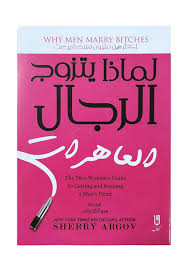
ومن خلال تجارب الكاتبة الشخصية وتجارب النساء وضعت مجموعة من القواعد على طريقة الفتاة التي تجذب الرجل بحسب وصفها ، كي تتعلم منها النساء أن لا يخضعن طوال الوقت للرجل حتى لا يصبحن مُملات ، فبين الحين والآخر علي المرأة أن تتجدد ليشعر الرجل بالتغيير