He was working in a sales company to support his family, which consisted of a father, mother, and sister. He worked to pay off his father’s debts that had burdened him. He is the “good son” as long as he performs his duty to the fullest extent, and any change in this is accompanied by anger, rejection, and neglect. In his workplace, which he found himself forced to live with, the state of domination and control by the chief of staff on the one hand is clearly evident, while on the other hand, it is matched by a state of subservience and submission on his part.
In fact, he has an unconscious desire to be fired from his job, but he fears for his family. From here arises a state of schizophrenia, as the two models of the cruel father and the boss represent the controlling authoritarian principle, and this is what arouses in him both submission and the spirit of rebellion.
He tried to follow the rules, to be a polite boy, to be rational as his boss described him at work... and between all these honest attempts, we find him completely losing himself, and he began to experience a surprising existential crisis!
Here he wakes up from his nightmares one day to find himself transformed into a disgusting “insect”!!
At first glance, he thought he was still dreaming, and amid the chaos and unreasonableness of the events, he needed conclusive evidence to confirm to him the veracity of the event, and this is what he got when he found his family shocked and terrified by the horror of the event. Then he realized the reality of the event and exclaimed, saying: “No, it is not a dream.” .
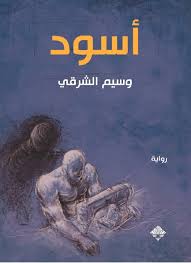
Moving between Zabaltani, Dawaila, Saydnaya, and all the way to Istanbul, Ahmed Aswad - a tailor on a sewing machine - tells the story of his life as it appears to him, a life full of transformations and first experiences: the beginning of falling in love, traveling, and planning a murder.
In a special language that may seem neutral, but it is sarcastic and full of emotion, Wassim Al-Sharqi explores forgotten corners of the lives of a marginalized segment of Syrians before 2011, such as: smugglers on the Lebanese border, or sewing factory workers, and patrons of bodybuilding clubs and bars in old Damascus.
“Black” is a journey to delve into the motivations and drivers that direct people’s behavior and destinies, and an attempt to trace the source of the blackness that surrounds our lives and settles in our souls, difficult to disappear.
The missing painting:
Noise that no one can hear except me, lights, people, and places that no one else knows, and others do not even believe. When I Was Alone is a collection of stories whose events will amaze you, and whose details will terrify you. It happened to some and it may happen to others, with a slight difference in the events.
Advice: If you read the book and feel afraid, do not sit alone, and if you think that you will not feel fear, do not sit alone either!
We must contemplate the secret of Homeric creativity in the epic narrative. So Homer does not care about telling only what happened in his epic “The Iliad,” but he is more interested in presenting the context of what happened and depicting the world in which this event occurred. We find events covering the universe from above Mount Olympus - the snowy sky - to the depths of the raging sea and the burning forests, and even the depths of the human soul itself in all its conditions, whether good or bad.
The events also cover gods, humans, the animal kingdom and birds. So we are dealing with a depiction of a universal existential situation, not a passing individual event. We are faced with an integrated system in which all the features and various components of living things and things interact, so that in the end we obtain a poetic exploration of the universe and its working system.