After trying my previous book, “In Defense of Insanity,” it occurred to me to do it again. The issue, in brief, is that I select from things that I have previously published in periodicals or introductions to books, what I consider to be valid beyond their time.
This book is not a continuation of the previous book, but rather a continuation of it.
It contains Lee's opinions on art, culture, journalism, women (and some politics). The question that confronted me in my first book confronts me now: What do these articles have in common?
The answer is as naive as I answered earlier: What unites these articles is that I wrote them.
The opinions here are my own, which may mean nothing to some of them, and may not mean anything to others. But it was important to me, myself, to say these opinions, and to record them, and among them was a farewell to figures like Assi Rahbani and Al-Dhahirah Rahbani, and even a farewell to a number of friends who had passed away, and who had passed through my life only briefly. Perhaps some bitterness still exists here as well. Upon reviewing the articles, I discovered that I was insisting once again on the losses that had befallen our lives. These are losses greater than military or political defeats. It is our constant humanitarian bleeding. And the one who gives us life...or makes us mad.
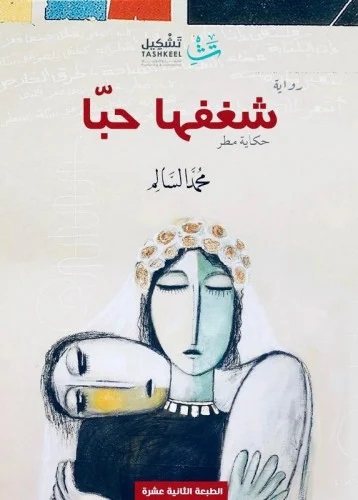
1- Poems and words that wander between the love of years, certain longing, and through stubborn imagination
With that beautiful patience, I find that separation is far and meeting is near
I can only tell you that... your love is a test...
2- Love and longing... imagination and patience... separation and meeting... in short, this is the test of love.
3- Poems and words describing the trial of love that combines love, longing, imagination, patience, separation, and then meeting.
Joan Tatar's memory falters on scenes that Syrians experienced in the laboratory of their torment. It is the slow Syrian time that brings and brings with it in Tatar’s diary the various elements of the experience: starting from the market, to the soldier, to being discharged from it, in a biography that contradicts time, from symbolic death to symbolic birth, in a country that resembles a long dormitory crowded with people. Throughout this cycle of Syrian life, murmurs and stinks are present. Life, as Joan Teter portrays it in this book, is an experiment with low sounds that end in final silence. An experiment with the depths of fear. Is it deeper than we imagined? Is it possible to escape from the fear that has become part of water, and from thirst, part of glut, and part of hunger? Many opposites meet on that distant horizon that made the Syrian dough in the soldier’s laboratory. Were they prisoners or soldiers? Are they condemned or heroes? Everything is equal, all values are equal in that horizon which is the space of Syria, the space of fear and pleas for freedom.
About the novel Mimosa:
The novel begins with a sentence by Albert Schweitzer: “We live in a dangerous world. Man ruled nature before he learned how to rule himself.”
A fantasy novel calling for kindness to plants. Its events take place in the fifth plant kingdom, which is always exposed to destruction by humans. Queen Mimosa will seek the help of her assistants on a long journey to search for dangerous plants to protect her kingdom. Many events take place in the sequence of the novel, including the happy side. The comedy, the sad side, the love, and will the queen get all the dangerous plants? Why will you perform the farewell anthem? What is the secret of Venus’ love for the peace lily and his attachment to Abu Nawas’s poems? Will they be able to get the yew? Who is Lithops? Its events take place until the end is reached.
In this novel, her imagination will take you to the furthest point... where we escape from our world
We will find solace and consolation in it, and our withdrawal into its imagination is not a withdrawal in the true sense of the word
But it is enough to give us some delicious caution so that we do not feel the power of life and the authority of its demands, which is nothing but a simple withdrawal that is not deep enough for us to forget our real misery...