Action Bollywood - Cinema:
(life quotes)
Life is as beautiful as the hardships a person may go through throughout his life.
Life's supplements are building a thin thread of hope, no matter how long the sorrows last
Or it is shortened, life continues and will not depend on its pleasures
God always compensates us for everything that is good for us.
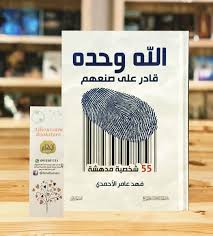
Are there really people who lived more than one life?! .. How and when did this happen?! .
At a time when violence and destruction overwhelm most parts of this planet, and news of murder and disasters tops every news bulletin... and brutal capitalism preoccupies the souls and minds of people, chasing after their own interests, and the number of the world’s wealthy people who have reached an unprecedented level in collecting money is increasing. In the midst of all this materialism and excessive selfishness, there are shining lights of humanity that go in the completely opposite direction. They are a different category of people, people who have dedicated themselves to giving, goodness, and charity, providing great services to humanity at the expense of their time and their own interests. People who still live among us after they were destined to live in the lives of those who came after them. People who were immortalized in history because they were high models of sincere giving to their communities and nations. They provided this universe with great services, values, and deeds that engraved their names on the corners of this planet that would not have lived, progressed, or arrived. It would not have been possible today if it were not for the gifts and services of the great prophets, messengers, scholars, and reformers, and even some simple people whose names have fallen from the pages of history, but they never fell from the comfort that settled their souls, the happiness that filled their souls, and the other lives they lived among those who came after them and benefited from their giving.
Yes... it is giving... that great human value that immortalized everyone who was attached to it and devoted to it... and gave to everyone who gave it.
All we hope for from this book is that it will be a source of inspiration for you to give in any form, at any size, and at any time, to join the club of great giving people. We also hope that the book in itself will be a simple gift from the author. It contributes to enhancing this great human value in our Arab societies, and is a very small step towards developing and improving life, and reconstructing this planet that the Great Creator has appointed us as successors in, and commanded us to strive to reconstruct.
What is the true value of a soldier's foot that saved the life of a higher-ranking officer? How does a person who has made laughter his profession actually laugh? How do brief yes or no answers summarize a man's happiness? What memories will a few paintings hanging in a school turned into a military hospital evoke for an injured student returning from war? Is it better to live to work, or to work to live?
These and other questions will be addressed by the German writer Heinrich Boll in this book. Reflecting in his sometimes funny, sometimes angry, and sensitive style every other time, his mockery of the conditions that followed the war, which forced people to resume their lives as if nothing had happened, and his mockery of the capitalist tendency that demands everyone to work to the best of their ability for the sake of “the future”... valuing contemplation. Slowly, Heinrich Bull writes in these stories his response to a hasty world, possessed by madness, and lacking its humanity.
In the thirties of the twentieth century, the writer Agatha Christie came from London to the city of Amuda in Syria, where she lived with her husband, the archaeologist Max Mallowan, for a period of time, and there she wrote her diary, “Come Tell Me How You Live,” in which she narrated pictures of her adventures in life in Syria and Iraq. .
After less than a hundred years, Haitham Hussein was forced to emigrate from his small city of Amuda to Damascus and from there to multiple stops: Dubai, Beirut, Cairo, and Istanbul, all the way to London, where he wrote his biography, responding to Agatha Christus about how he lives, and in which he depicts the paradoxes of his journey to search for a safe haven. For him and his family.
Summary of the novel (Gypsy Female) This novel tells the story of a disabled Iraqi Christian girl whose mother died while giving birth to her. She lived under the care of a doctor father who sought the help of a colleague at work to raise his only daughter, but this woman is also kidnapped by death, so the girl lives with her father, who she mysteriously loses during the invasion of Kuwait, leaving for Baghdad at a time when Hunger and comprehensive siege, and she lives there between a close Christian couple until they die, leaving “Asmaa”, having lost her three mothers in succession. She remains alone, fighting the hell of bloody violence spreading in her Iraqi homeland until she leaves it to other homelands, as if she were a gypsy female tormented by travel as she climbed the walls of that country. Towering nations with one arm. It is the story of an Arab girl who is ravaged by the horrors of what the world is experiencing around her, but she creates life with a unique feminine ability as she moves between several homelands like a shivering bird searching for a nest that might shelter it in a forest whose tree leaves have fallen in a weeping autumn. This narrative may announce (the death of the novelist), but knowledge of this can only be determined by the reader as he follows the aesthetics of the narrative in it.