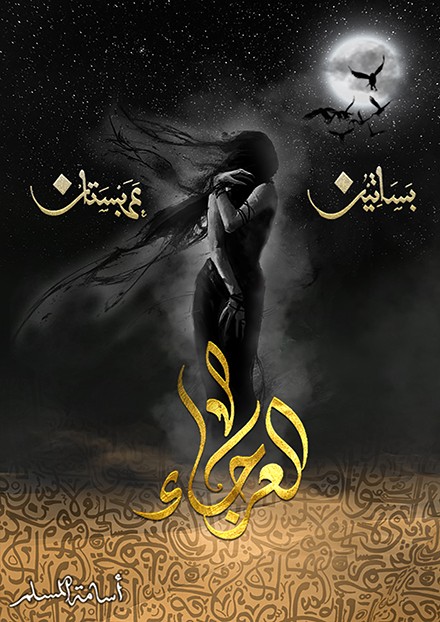
Sweet Batush, Batoul, Turkish Comfort, Mrs. Hard Coin, different names for one woman whose trace has been lost, and finding her alive or dead has become necessary so that her family can obtain a large estate inherited by the mysterious woman; The journey to search for her becomes an opportunity to discover the secrets of the high society of which Batoul was once a part. It is a journey of ups, downs, and transformations of a woman who manipulated everyone and took revenge on them in order to avenge an injustice after she hid a mysterious secret behind her captivating laugh.
In this book, Aziz Nissin directs his harsh criticism to expose the “rot” that has befallen the velvety layers of society, and the opportunism, vulgarity, and absence of values that prevail in them, but he does so by mocking the situations and paradoxes that make men blind their eyes to what they do not want to believe, and voluntarily surrender. To the deceptions and vicissitudes of a sweet Kaptosh playful girl.
Cristina Fernandez Cubas does not introduce her heroines to us easily. She takes us on straight paths at first glance, and at one moment, she turns everything upside down. We discover that her characters are torn between two realities, the separation between which is very precise: the fixed reality, and the imagined or delusional reality. . One of them overpowers the other at times, and at other times a reconciliation occurs between them, without us knowing which of them truly exists, and which of them does not exist.
“Nona’s Room,” which won the Critics’ Prize in Spain (2015) and the National Narrative Award (2016), is a magnifying glass through which we see the complexities of the human soul and the mystery that surrounds our lives without us always succeeding in observing and understanding it. In it, “Cubas” reconsiders childhood and maturity. And loneliness and family, revealing to us that nothing is really as it seems, writing all of this in transparent language and in a unique style that gives it a detective touch, with skill and lightness.
The poetry of Sheikh Sultan bin Salem Al Qasimi was a directed speech, a documented history, a drawing with words, pure emotion, and mature thought. His poetry was visions of light and a lamp in a niche. It deserves to be read, studied, and followed, especially since it depicts an era in which reading and writing became scarce.