Nathan Price, a Baptist minister, leaves civilized America, going on a missionary mission to the Belgian Congo, bringing with him his family, who carries with them everything they think they will need, but the African land surprises them, turning everything they brought into something worthless, and even their very existence will be full of challenges. Especially with the political events that are ravaging the country that is struggling to gain its independence, and the major powers are interfering in it, assassinating Patrice Lumumba, the country's first elected prime minister.
The novel is alternately narrated by the mother, who loses something irreplaceable there, and her four daughters, each of whom narrates what is happening in her own way, trying to find her own separate path to salvation.
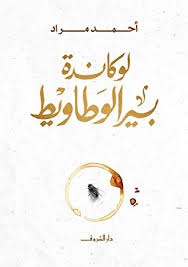
“The Poison Tree Gospel” is an intense journey in the vibrant African land, and a deep exploration of the other, written with a smooth narrative in which Barbara Kingsolver worked to transform the thorny threads of religion, politics, and race into a piece of literature of breathtaking beauty.
This novel was nominated for several literary awards, was translated into more than thirty languages, and sold more than four million copies around the world.
The best way to understand Bakunin suggests looking at what he wrote, and what he did, as part of a libertarian movement within the socialist movement and thought, and the main disagreement between him and Marx centered around the concept of authority and freedom. Regarding this point, Bakunin presented a set of ideas: on organization and revolution, and human nature, Criticism of the concepts of the social contract, the state, democracy, and elections; Marxism and liberalism are interconnected, intertwined, and transcend - in an amazing way - both; This is Bakunin's main intellectual contribution. Bakunin believes that all authorities are illegitimate, and that freedom is the main condition for human development. Before we present the details of his vision, we must clarify that Bakunin did not reject all authorities absolutely, and that anarchism is not chaos. Anarchism was subjected to a ruthless campaign to distort it, led by its companions: Marxists first, then liberals, and of course those with traditional authority, but it is an unjust campaign. In fact, Bakunin distinguishes between authority that does not emanate from below, but is imposed on people, and authority that consists of Below, in an organic and natural way, and it exercises its influence within specific and temporary limits.
Remembering his childhood, Miguel tells of a wooden statue the size of a man, carved by a musical instrument maker before his death, so the people of Itape decided to place it at the top of the hill, so that it would become a landmark of the village. Massive events and wars take place, and the novel branches out to narrate the events of two decades of Paraguayan history, before returning to that hill with its steadfast statue, which has become very symbolic.
Rua Bastos shows history from the perspective of ordinary people, poignantly depicting their attempts to rebel against authority, revealing the brutality of the ironies of history when these people are forced to kill and die in senseless wars that they fight while standing with the very authority against which they rebel.
Using a linear sequence in narrating the events of his novel, and painting a huge mural about Paraguay, Rua Bastos writes, in a tight plot, his novel, which the great Argentine writer Borges said was one of America’s best novels...