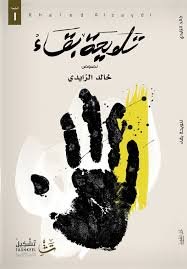
أنا خطيئتُكَ التي لن تُغتفر، وأنا الذنب الذي بينكَ وبين دعواتكَ التي لن تُستجاب. سأظلُ أدعو عليكَ بصلواتي الخمس، وفي كلِّ سجدة، سأطلبُ من عظمته التي يهتزُ لها الكون
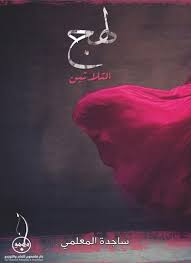
Love is the most dangerous and mysterious emotion. The most dangerous of these is because the lover often loses the ability to appreciate reality. Nothing makes him ready for death as love does. How many men lost their lives to reach their loved ones, and how many women defied their societies and were killed for a moment of connection with their beloved. History and literature tell us about many love stories that ended in death or madness. Because love is a powerful emotion that pushes the sails of the heart into the gates of an adventure with choppy waves. It does not value any danger, and it never accepts submission to mental trials.
As for the ambiguity of this emotion, it comes from ignorance of its causes. Most of the time, we do not fully know what we love about the person we love, and we often discover in him the opposite of what we thought when we loved him. Love - despite its arrogance - remains the most fragile of emotions, and often dissipates when it comes into contact with reality. Just as it blows like a storm, it can suddenly calm down, leaving... The air behind him was filled with dust.
Despite everything, love remains the most beautiful feelings that a person can possess, and the moments of connection that often precede a tragic end for lovers may be the happiest moments they live.
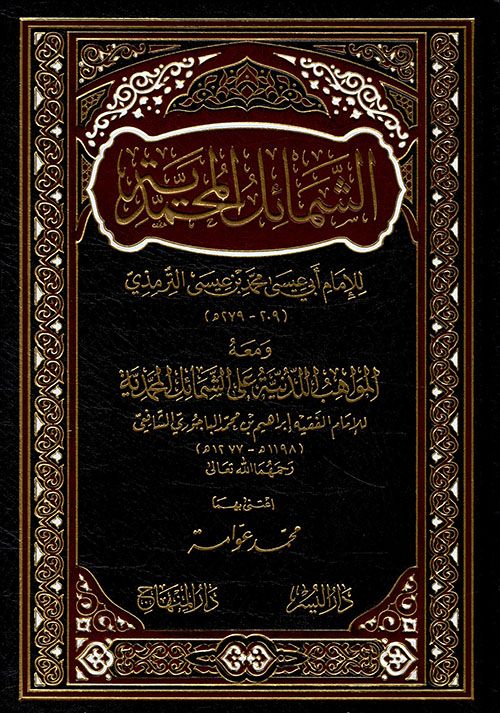
The message of forgiveness, a contemporary formulation
65 AED
115 AED
0 Reviews0 sold
Product Details :
Based on this wish for all Arabs to read what they are able to read, from ancient heritage to modern antiquities, I returned to (The Epistle of Forgiveness) to place it in the hands of senior scholars, intermediate scholars, and those below that. But how do we return to it with passion, eagerness, and the ability to benefit from it after readers have moved away from it until there is no place left for it except in the farthest corners of libraries because it cannot be read no matter how much we tempt people to read it? Would they not be repulsed by it and flee from it as they would from a heavy burden, even if you gave them a generous reward for reading it? Here I came up with an idea that I hope will resonate well with people and students of culture, which is to reformulate it.
It was necessary to include the text (Ibn al-Qarih’s letter) because the letter of forgiveness was a response to it. It is not possible to understand (forgiveness) without considering the message of (Ibn Al-Qarih). I treated it in the same way of paraphrasing so that the two messages fit together.
In its content, the novel deals with the story of a person who begins to wake up one day to find two men at the door telling him that he is wanted for trial, but they do not explain what case they are accusing him of. For any crime, he is interrogated, and as events develop and change, he fails to find out his crime. He and his lawyer begin to defend himself in various ways. But the difficulty they face is not knowing what his crime was
A girl enters a nunnery with a box and a wedding dress. A woman follows a homeless woman wearing a green dress through the streets of the city. A third woman’s life changes after visiting her husband’s family cemetery, and she keeps searching for herself, for a “place.” And a fourth woman is lost in a world of gray, brown, and purple faces, above which a tree floats. She survives, and a fifth woman visits Istanbul with her husband and stays in the same hotel where Agatha Christie once stayed, and the lives of the two intersect in a mysterious way.
These five women are the heroines of Cristina Fernandez Cubas, who narrates a special magic that overwhelms us, seduces us, arouses our anger, and fills us with images, feelings, descriptions, and fantasies, before which we cannot be astonished, by the ability of her writer, to create a dreamy atmosphere in a unique literary style.