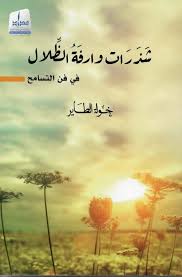
Fragments and lush shadows...
The material consists of positive and optimistic messages that provide advice, a kind word, and an opportunity for change and self-examination
"The book presents Hanan Al-Samak’s philosophy of happiness in its finest form, within a framework enriched with values and principles that enable individuals to move toward a life filled with contentment, hope, and balance. It incorporates the latest practices of positive psychology and offers useful techniques and exercises to enhance positive thinking and develop the skill of living happily."
كن محبًا بقلم سارا براوت ... كيف يتعافى الإنسان من صدمات حياته وآلامه النفسية؟ البعض يذهب إلى معالج نفسي، والبعض الآخر يسلك الطرق الروحية، وآخرون ينفون من ...
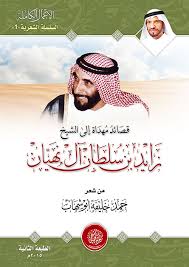
Manifestations of Mohammed bin Rashid
Horses are in the character of Mohammed bin Rashid, the alphabet of language, and the dialectic of primary longings. They are the moment of brilliance in the race, in the context, and in the eternal view. They are a horse in the poetry of the poem, they are the cooing on the dewy branches, they are the curls at noon. We approach the youth of horses and the blink of a poem, and the brilliance awes us, and our ancient history, butterflies spread their sheets on the horseback with the chivalry of the nobles, and the youth of the nobles. We approach, while we are in the field, a feeling, a sky, studded with the verses of the Transfiguration and the spirit of the pure, we approach the horses of Muhammad bin Rashid, as if we are reading a poem by the most famous stallions. Poets, we approach a wild flower embraced by longing in a reddish soil. We approach the horses of Mohammed bin Rashid, as if we are following the steps of a language full of song. We approach the horses of Mohammed bin Rashid as if we are stepping into space. We approach the horses of Mohammed bin Rashid, as if we are drawing a picture of a star dancing in the sky. Heaven, we approach the horses of Mohammed bin Rashid, as if we are reciting the story of light in the imagination of the pious. We approach the horses of Mohammed bin Rashid, as if we are walking on a carpet of water. We approach the horses of Mohammed bin Rashid, as if we are flying with wings whose feathers are made of beautiful braids. We approach the horses of Muhammad. Bin Rashid, as if we were kissing the lip of the air. We were approaching the horses of Mohammed bin Rashid, as if we were hugging a rose on the equator. We were approaching the horses of Mohammed bin Rashid, as if we were lining up the letters of a poem in the style of Haifa. We were approaching the horses of Mohammed bin Rashid, as if we were crossing a river whose birds were in the same pattern. Eternity, we approach the horses of Mohammed bin Rashid, as if we were in the presence of Greek philosophies, we approach the horses of Mohammed bin Rashid, as if we were in the original, and in the chapter, the secret in the seismic leap controversy, we approach the horses of Mohammed bin Rashid, as if we were in the Houma and Jaljaliyya, approaching the horses of Mohammed Bin Rashid, as if we were in the hermitage of brilliance and oriental gumption. We approached the horses of Mohammed bin Rashid as if we were in the cloud’s sheath and the generous miniatures of abundance. We approached the horses of Mohammed bin Rashid as if we were in the heart of the cloud, rich in dust.
The events of the play in our hands take place in the sixties of the last century in London, during a period of great social changes. The theme of the play is the cultural and civilizational poverty and great frustration experienced by an entire generation of young people living on social aid.
In “Rescued,” Bond appears to enjoy exhausting our senses by torturing an infant - in a public park - whose mother had left him with his father. What is most horrific is that the alleged father joins his companions in practicing this violence against the infant, to the point of death, without a clear reason. But the critics who defended Bond - and they are few - realized that when he presents a scene like this, he presents it to condemn that political, social, moral and economic vacuum through what T. s. Eliot calls art the “objective equivalent.”