About the book
The book talks, at the beginning, about the roots of the establishment of the Emirate of Qatar since it was subordinate to the Bani Khalid who ruled Al-Ahsa, and after him, Sheikh Muhammad Al Khalifa’s settlement in Al-Zubara and its fortification, before the conquest of Bahrain, and Qatar’s continued subordination to Bahrain, and the process of the British separation of Qatar from Bahraini rule, and so on. This was followed by the stages of dependency that Qatar entered into, from dependency to Saudi Arabia and entering under Ottoman and then British rule, and it talks about the Al Thani family, the roots of their presence in Qatar, and the role of the Al Thani in collecting zakat and delivering it to the ruler of Bahrain,,
The book talks about Qatari independence from Britain, the coup process that became an alternative to the process of peaceful transfer of power, the political mentality of Qatar’s rulers affected by historical accumulations and the complex of geographical space, and the personality of Hamad bin Khalifa, who is governed by the psychological complex of his emirate’s position on the regional and international political map. And about his efforts to search for regional leadership, the goal of establishing Al Jazeera and establishing the American base, and the failure of Hamad bin Khalifa’s efforts to expand the geographical map of his emirate,,
The book also talks about the relationship between the Qatari regime and the Qatari people, and the regime’s efforts to change the demographic composition in Qatar, and the policy of replacing one people with another, and turning the Qatari people into a minority. The book moves on to the relationship of the Qatari regime with its Gulf and Arab surroundings, and then Doha’s regional and international relations, and the attempts Hamad bin Khalifa in limiting the Saudi and Egyptian role and trying to build a regional role for Doha, relying on financial diplomacy,,
The book also talks about the beginning of the roots of the relationship between Qatar and terrorist organizations (Al-Qaeda and after it the Brotherhood), and about the role of Qatar, Al Jazeera, and the Brotherhood centers in the project of creative chaos and regime change, and about the role of Doha in creating terrorist organizations in Syria and Libya, and supporting terrorism in Egypt, and about the plans. The Qatari conspiracy against Saudi Arabia, Egypt, and Bahrain, and in conclusion, the book talks about the crises of 2014 and 2017, and about Doha’s scenarios in light of the quadrilateral boycott it is experiencing, and the dangers of bringing in Iranian and Turkish forces, against the Emirate of Qatar and the Qatari regime,,
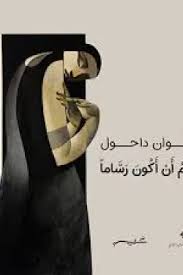
Years have passed since his absence, and Mamdouh Adwan had more. But death was no longer with him.
What has not been published before. We collect it today in this book.
Mamdouh Adwan left a file on his computer containing completed poems that he had prepared for publication, and other poems that he called incomplete poems.
Mamdouh did not give a title to the file. But he left it under the name (A Poet's Job).
(A Leap in the Air) is the title of a book that Mamdouh Adwan had prepared for publication.
But death forced him to complete this collection. Therefore, we at Dar Mamdouh Adwan decided to collect the poems that he wanted to publish and add to them some of the missing poems. Let us present to the reader some of his completed poems that have not been published, and other poems that he did not complete, but are open to the possibility of completion.
ملخص: يعرض الكاتب مجموعة من المواقف والمبادئ على القادة كالنجاح والفشل وتحقيق السعادة وإدارة الوقت والتفويض حل المشكلات وغيرها، ومن خلال تصرفهم تجاه هذه المواقف ...
A brief overview of the novel Chronic Longing The novel centers around Salah, a character who is characterized by a captivating and different scent, and he has a strong attachment to his mother that reaches the stage of holiness in respect, love, and attachment. This appears in his conversation with her as he sits near her grave, which he returns to to celebrate her birthday, there, and distributes sweets to the graves in a surreal way. Symbolism. The first chapters talk about Salah, the adventurous and loving child who travels long kilometers to see a girl who lives on top of a mountain. He has not heard her talk or met her, but he loves her. He talks about his adventure with his friend Mustafa when they went to join the revolution to fight their enemy. She talks about Salah, who works at the newspaper and then leaves because he reaches retirement age. Najat, the director of personnel affairs at the newspaper, talks about this aspect, as does the security man who asks him to cooperate with him. Then the novel talks about Salah through the character of the cemetery guard, Fawzi, as well as through a woman named Salma. They both hear him talking to his dead mother, and then Amira, his childhood sweetheart, talks about him, who grows up, gets married, divorces, and meets him again. There is the character of Colonel Zahra, who summons him because of his attempts to transport his deceased mother and all the dead in the neighborhood to their homes due to being threatened. Salah organizes a reverse funeral that transports the dead from their graves to their homes, which is a symbolic funeral more than a real one, in order to preserve their memory as displaced people. It later becomes clear that Colonel Zahra is the same girl that Salah loved in high school. There is the character of Saber, who is the other side of Salah, who sometimes judges him and reveals some truths at other times. The novel restores consideration to man's relationship with his natural mother, his mother, the earth, and his mother, the cause, and raises the alarm of the disappearance of the memory of the displaced due to the practices of extremists who want to burn and plow the cemetery. Technically, the novel follows the short story approach, where each chapter constitutes a short story that the reader enjoys, but encourages him to continue reading.